Ethnographic Research
Research+ Ideation!
Ux Case Study
Ux Case Study
Ux Case Study
Swap Style: Designing a Fun, Affordable, and Sustainable Way to Exchange Clothes
Swap Style: Designing a Fun, Affordable, and Sustainable Way to Exchange Clothes
Swap Style: Designing a Fun, Affordable, and Sustainable Way to Exchange Clothes
ROLE
UX/UI Designer
EXPERTISE
UX/UI Design
YEAR
2024
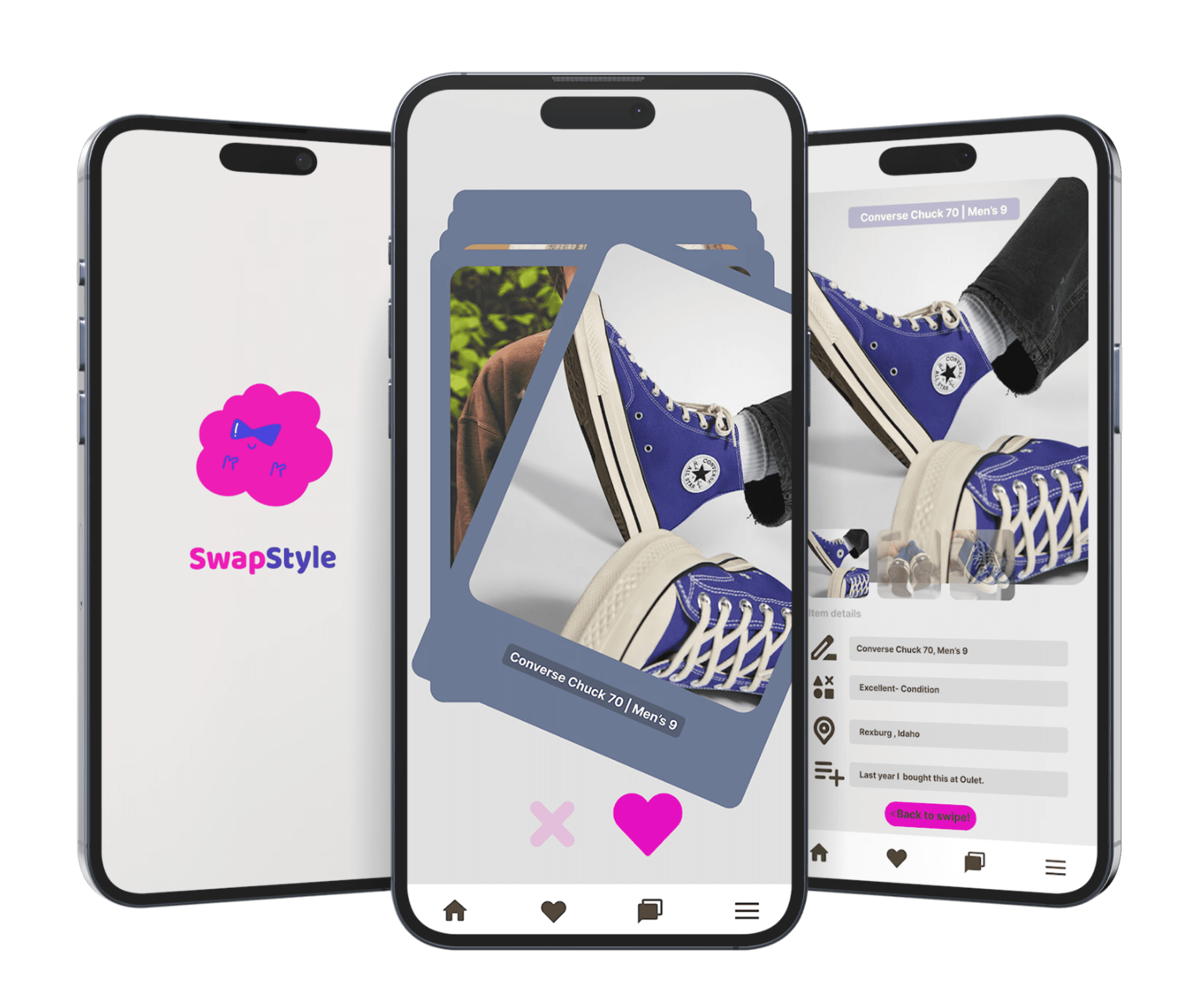
Many people want to update their wardrobe without spending too much or adding to fashion waste. Inspired by this, I created SwapStyle, a clothing exchange platform that uses a swipe-based design to make secondhand shopping simple, fun, and community-focused.
Many people want to update their wardrobe without spending too much or adding to fashion waste. Inspired by this,
I created SwapStyle, a clothing exchange platform that uses a swipe-based design to make secondhand shopping simple, fun, and community-focused.
Many people want to update their wardrobe without spending too much or adding to fashion waste. Inspired by this, I created SwapStyle, a clothing exchange platform that uses a swipe-based design to make secondhand shopping simple, fun, and community-focused.
Overview
-
Why is SwapStyle?
Overview
-
Why is SwapStyle?
Overview
-
Why is SwapStyle?
People love trying on different clothes, but often feel concerned about waste and cost. Clothing swaps help reduce waste and offer diverse options. However, finding something to exchange and making the process enjoyable is still a challenge.
That’s why I created SwapStyle, a clothing exchange platform with a swipe-based design inspired by dating apps, making it a fun and sustainable way to refresh wardrobes.
I’m researching user engagement to understand their experience and find ways to improve it.
People love trying on different clothes, but often feel concerned about waste and cost. Clothing swaps help reduce waste and offer diverse options. However, finding something to exchange and making the process enjoyable is still a challenge.
That’s why I created SwapStyle, a clothing exchange platform with a swipe-based design inspired by dating apps, making it a fun and sustainable way to refresh wardrobes.
I’m researching user engagement to understand their experience and find ways to improve it.
People love trying on different clothes, but often feel concerned about waste and cost. Clothing swaps help reduce waste and offer diverse options. However, finding something to exchange and making the process enjoyable is still a challenge.
That’s why I created SwapStyle, a clothing exchange platform with a swipe-based design inspired by dating apps, making it a fun and sustainable way to refresh wardrobes.
I’m researching user engagement to understand their experience and find ways to improve it.
Project Goal + Process
-
Project Goal + Process
-
Project Goal + Process
-
Let’s make outfit exchanges fun and affordable!
Let’s make outfit exchanges fun and affordable!
Let’s make outfit exchanges fun and affordable!
Create a more engaging experience for secondhand clothing exchange
Design a user-friendly interface that lowers the barrier to participation
Encourage sustainable fashion habits through easy and fun swapping
Increase user participation and retention in the exchange process
Create a more engaging experience for second-hand clothing exchange
Design a user-friendly interface that lowers the barrier to participation
Encourage sustainable fashion habits through easy and fun swapping.
Increase user participation and retention in the exchange process.
Create a more engaging experience for secondhand clothing exchange
Design a user-friendly interface that lowers the barrier to participation
Encourage sustainable fashion habits through easy and fun swapping
Increase user participation and retention in the exchange process
User Pain Points
User Pain Points
User Pain Points
Through analyzing current secondhand platforms and observing user behavior, I found that…
Users who want to exchange clothes often find the process time-consuming and unorganized.
Many secondhand platforms require long browsing sessions, making it hard to find something they actually like.
Some people feel uncomfortable or hesitant about trading due to unclear item conditions or a lack of trust.
Through analyzing current secondhand platforms and observing user behavior, I found that…
Users who want to exchange clothes often find the process time-consuming and unorganized.
Many secondhand platforms require long browsing sessions, making it hard to find something they actually like.
Some people feel uncomfortable or hesitant about trading due to unclear item conditions or a lack of trust.
Through analyzing current secondhand platforms and observing user behavior, I found that…
Users who want to exchange clothes often find the process time-consuming and unorganized.
Many secondhand platforms require long browsing sessions, making it hard to find something they actually like.
Some people feel uncomfortable or hesitant about trading due to unclear item conditions or a lack of trust.
Ethnographic Research
Ethnographic Research
Research+ Ideation!
Research+ Ideation!
Ethnographic Research
Research+ Ideation!
I have researched second-hand exchange and trading platforms, as well as other popular apps, to collect fun and interesting ideas they use to enhance and engage the user experience, because I wanted to make the exchange process more fun.
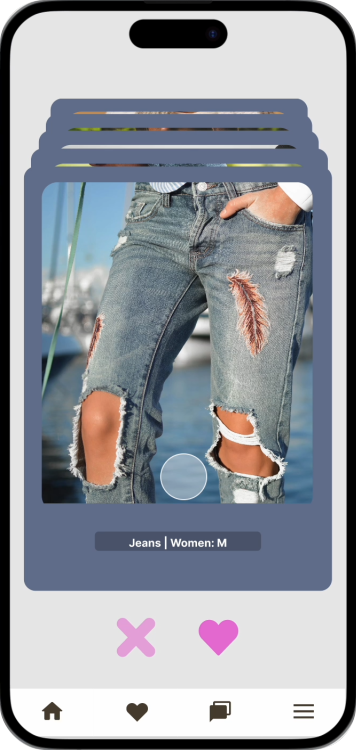
I found that the swiping interaction on dating apps is similar to finding something interesting and choosing it, which could make the exchange process easier.
From my ethnographic research, I found the following insights:
People have some experience using second-hand exchange platforms.
For certain types of products, people are willing to use second-hand platforms to find what they need.
When searching for second-hand items, users hope to see detailed descriptions and clear images to help them evaluate the condition of the items.
People are familiar with the swiping style to express like or dislike, as seen in dating or friend-making apps.
This interaction style feels similar to spotting something interesting and choosing it, which could make the exchange process easier.
Although there are various second-hand platforms available, some people remain concerned about the risks of exchanging or buying second-hand products.
I have researched second-hand exchange and trading platforms, as well as other popular apps, to collect fun and interesting ideas they use to enhance and engage the user experience, because I wanted to make the exchange process more fun.
I found that the swiping interaction on dating apps is similar to finding something interesting and choosing it, which could make the exchange process easier.
From my ethnographic research, I found the following insights:
People have some experience using second-hand exchange platforms.
For certain types of products, people are willing to use second-hand platforms to find what they need.
When searching for second-hand items, users hope to see detailed descriptions and clear images to help them evaluate the condition of the items.
People are familiar with the swiping style to express like or dislike, as seen in dating or friend-making apps.
This interaction style feels similar to spotting something interesting and choosing it, which could make the exchange process easier.
Although there are various second-hand platforms available, some people remain concerned about the risks of exchanging or buying second-hand products.
I have researched second-hand exchange and trading platforms, as well as other popular apps, to collect fun and interesting ideas they use to enhance and engage the user experience, because I wanted to make the exchange process more fun.
I found that the swiping interaction on dating apps is similar to finding something interesting and choosing it, which could make the exchange process easier.
From my ethnographic research, I found the following insights:
People have some experience using second-hand exchange platforms.
For certain types of products, people are willing to use second-hand platforms to find what they need.
When searching for second-hand items, users hope to see detailed descriptions and clear images to help them evaluate the condition of the items.
People are familiar with the swiping style to express like or dislike, as seen in dating or friend-making apps.
This interaction style feels similar to spotting something interesting and choosing it, which could make the exchange process easier.
Although there are various second-hand platforms available, some people remain concerned about the risks of exchanging or buying second-hand products.
Other Research:
Other Research:
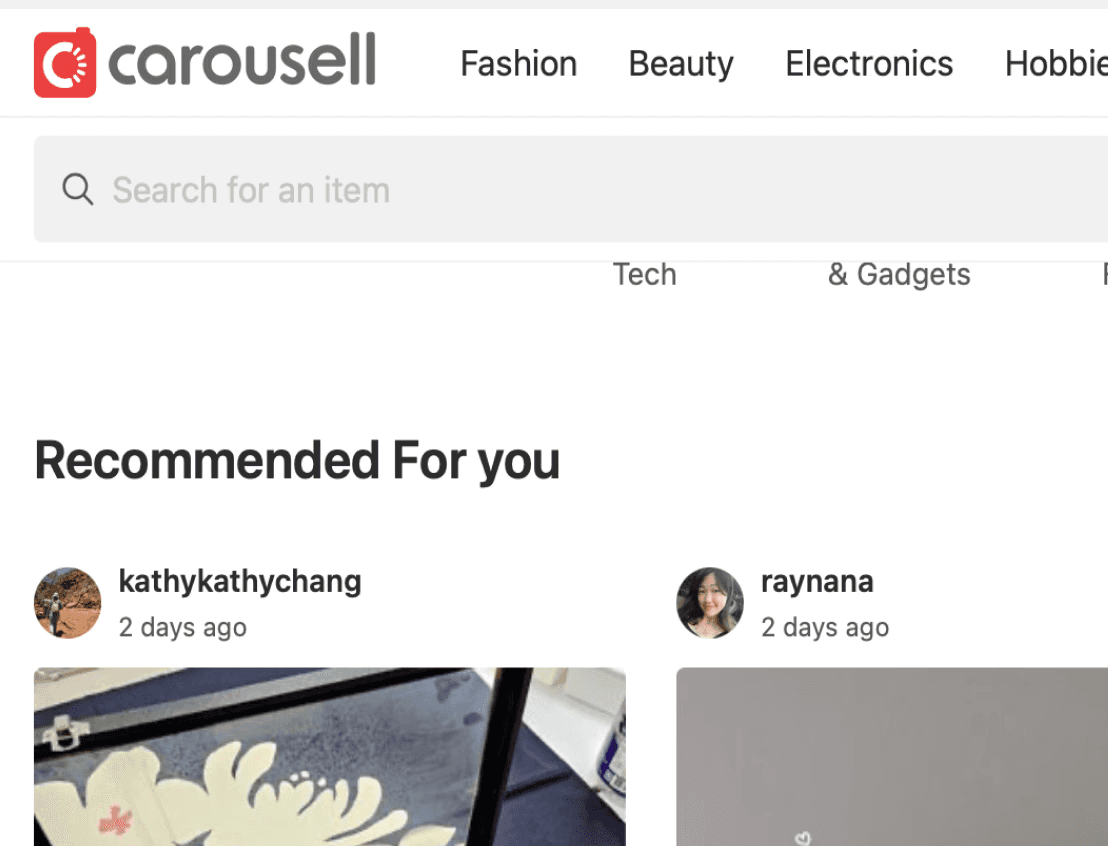
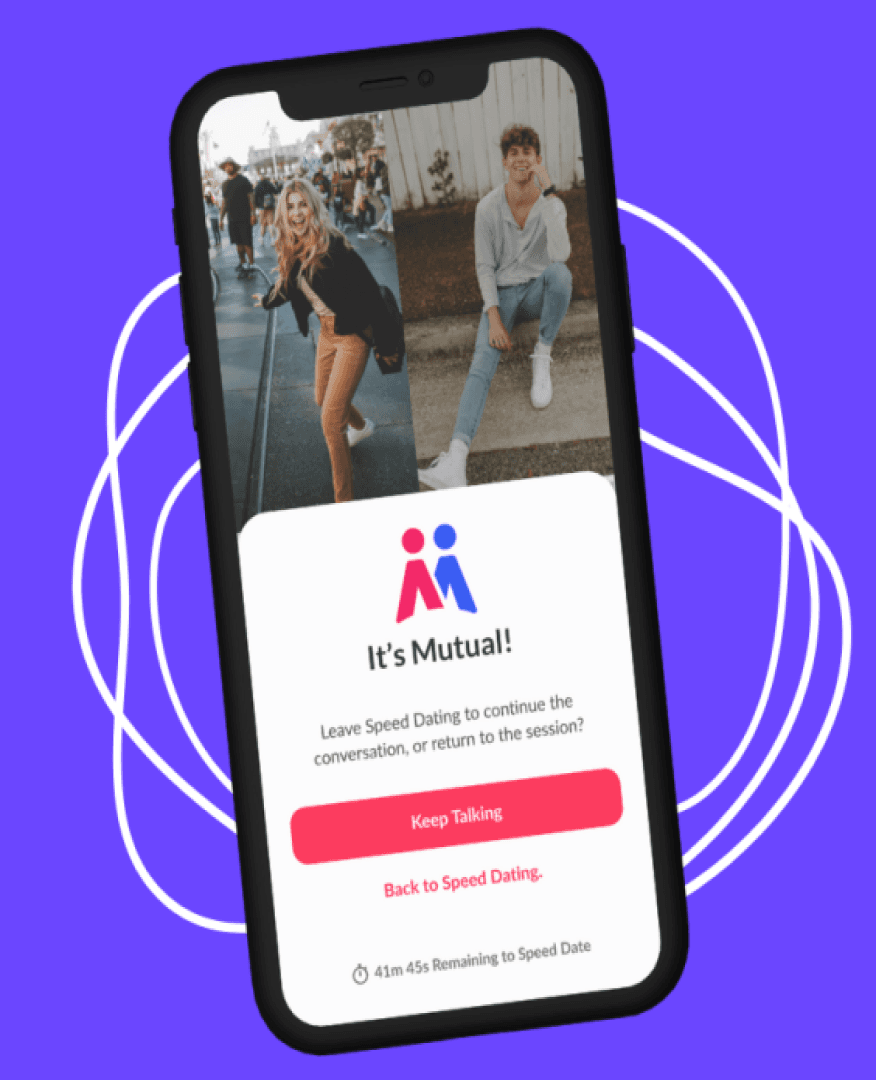
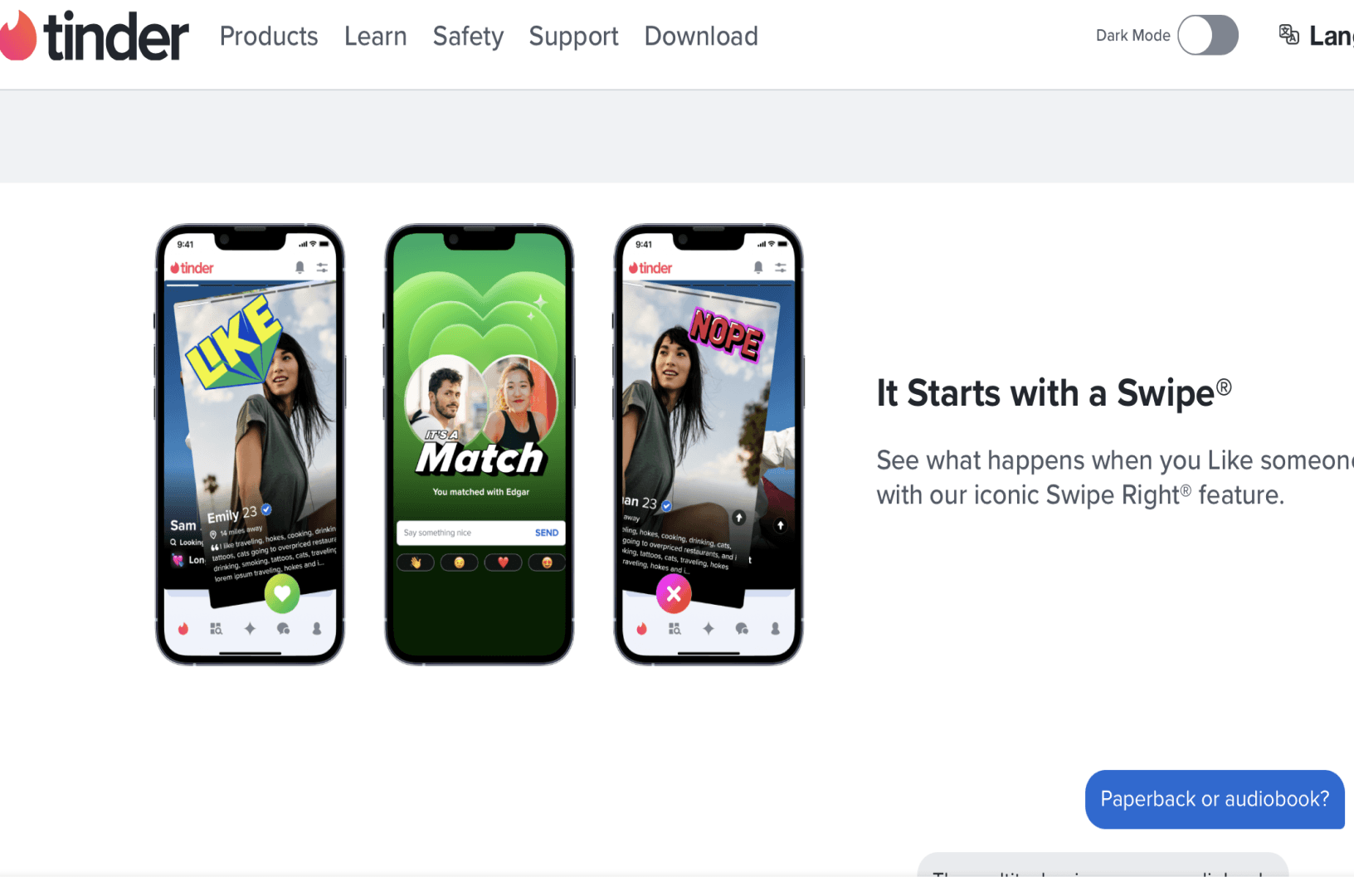
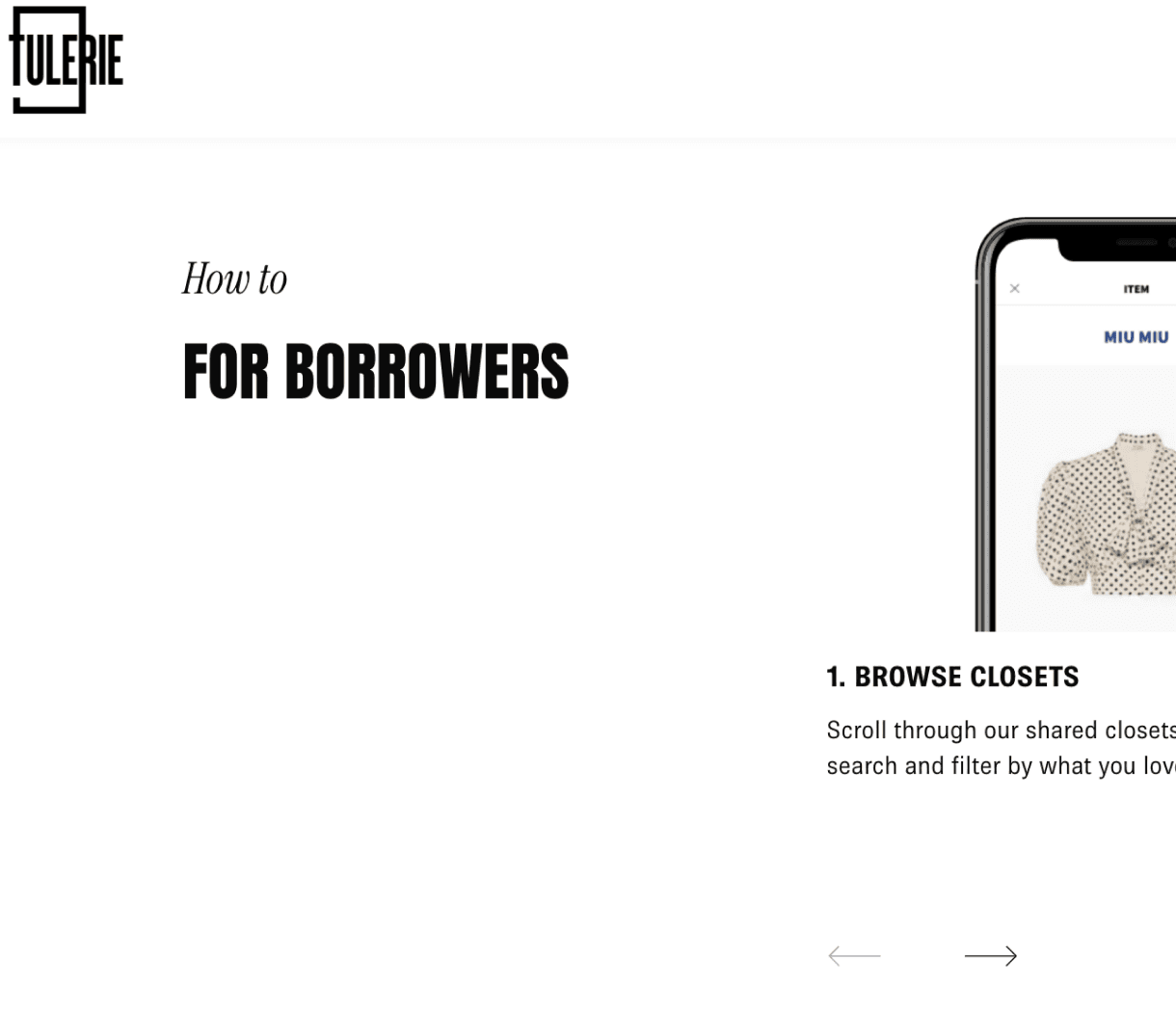
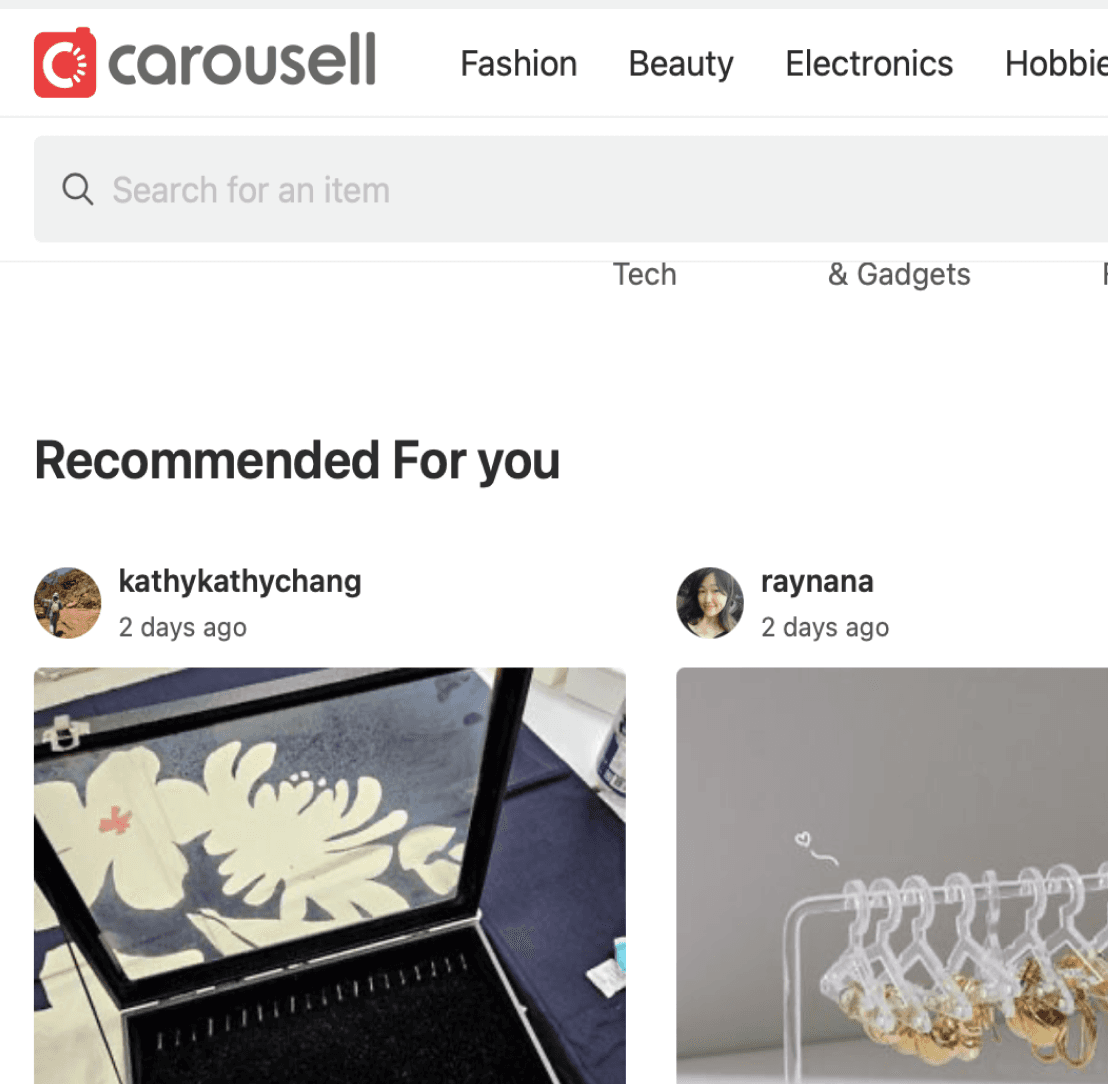
( From left to right are screenshots showcasing examples of dating apps, second-hand marketplaces and peer-to-peer clothing rental marketplace. )
( From left to right are screenshots showcasing examples of dating apps, second-hand marketplaces and peer-to-peer clothing rental marketplace. )
( From left to right are screenshots showcasing examples of dating apps, second-hand marketplaces and peer-to-peer clothing rental marketplace. )
Based on the insights, here are the ideas I want to incorporate into this design:
Based on the insights, here are the ideas I want to incorporate into this design:
Based on the insights, here are the ideas I want to incorporate into this design:
Swipe to Match: Introduce a swipe-based system, inspired by dating apps, to make exchanges more engaging and intuitive.
Easy and Fun: Design a seamless and enjoyable user experience.
Sustainability Focus: Encourage trading as an eco-friendly alternative to buying new items.
Community Feel: Build a social environment where users can interact, share outfits, and follow one another.
Direct Communication: Integrate a dedicated chat room for each exchange, allowing both parties to communicate directly, arrange logistics, and build trust.
Swipe to Match: Introduce a swipe-based system, inspired by dating apps, to make exchanges more engaging and intuitive.
Easy and Fun: Design a seamless and enjoyable user experience.
Sustainability Focus: Encourage trading as an eco-friendly alternative to buying new items.
Community Feel: Build a social environment where users can interact, share outfits, and follow one another.
Direct Communication: Integrate a dedicated chat room for each exchange, allowing both parties to communicate directly, arrange logistics, and build trust.
Swipe to Match: Introduce a swipe-based system, inspired by dating apps, to make exchanges more engaging and intuitive.
Easy and Fun: Design a seamless and enjoyable user experience.
Sustainability Focus: Encourage trading as an eco-friendly alternative to buying new items.
Community Feel: Build a social environment where users can interact, share outfits, and follow one another.
Direct Communication: Integrate a dedicated chat room for each exchange, allowing both parties to communicate directly, arrange logistics, and build trust.
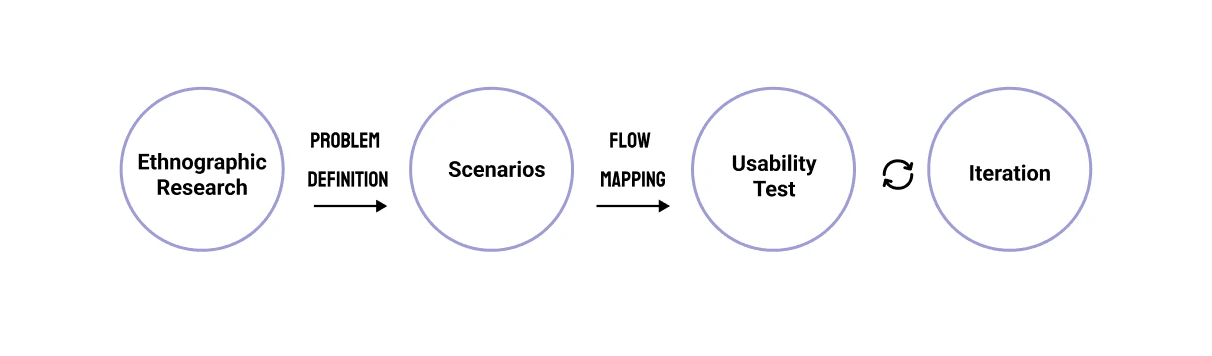
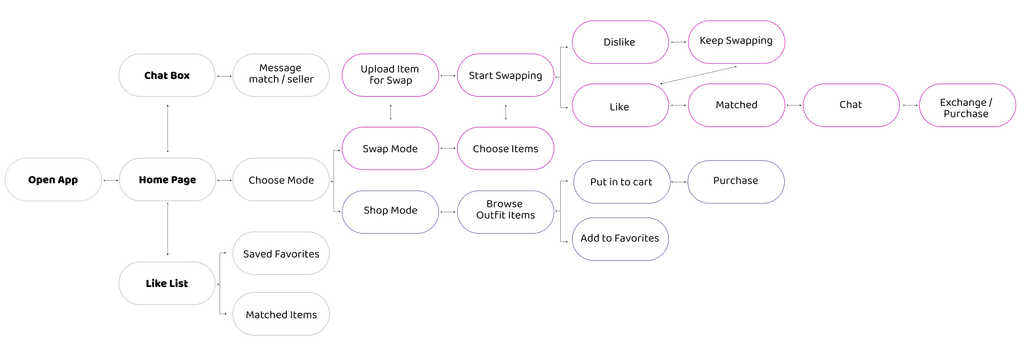
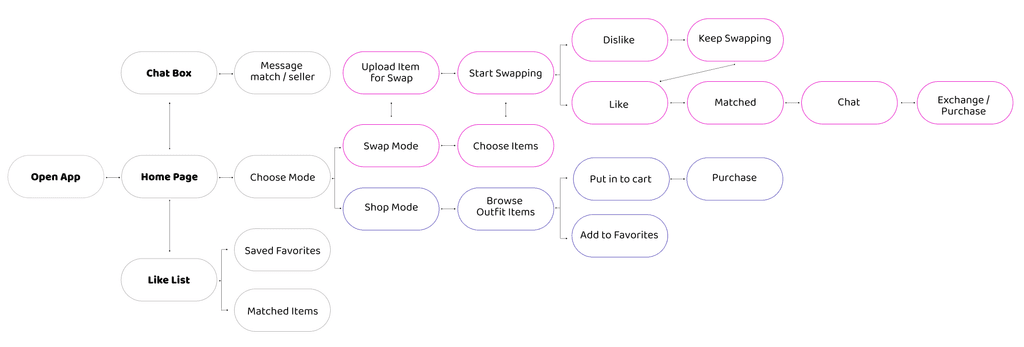
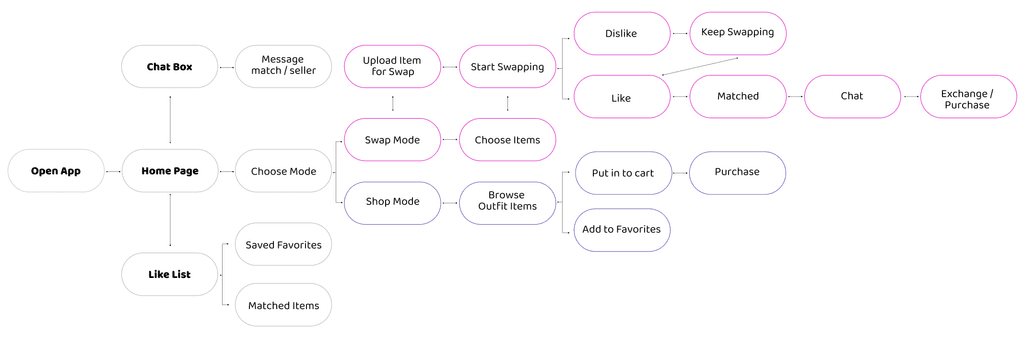
Based on the findings from my ethnographic research, I created a user flow to visualize how users navigate through the SwapStyle app. This process helped me identify key interaction points and refine the overall experience, which later informed the scenarios illustrating how users engage with the system in real-life situations.
Based on the findings from my ethnographic research, I created a user flow to visualize how users navigate through the SwapStyle app. This process helped me identify key interaction points and refine the overall experience, which later informed the scenarios illustrating how users engage with the system in real-life situations.
Based on the findings from my ethnographic research, I created a user flow to visualize how users navigate through the SwapStyle app. This process helped me identify key interaction points and refine the overall experience, which later informed the scenarios illustrating how users engage with the system in real-life situations.
User Flow
After mapping the user flow, I gained a clearer understanding of how users interact with the app step by step. To make these flows more tangible, I developed scenarios that illustrate how users might engage with SwapStyle in different real-life contexts.
User Flow
User Flow
After mapping the user flow, I gained a clearer understanding of how users interact with the app step by step. To make these flows more tangible, I developed scenarios that illustrate how users might engage with SwapStyle in different real-life contexts.
Backstory:
You're passionate about second-hand fashion and love breathing new life into unique pieces. Now, you've found this app—Swap style, a second-hand platform for outfit items, where you can upload profiles of the clothes you'd like to swap with others.
1
2
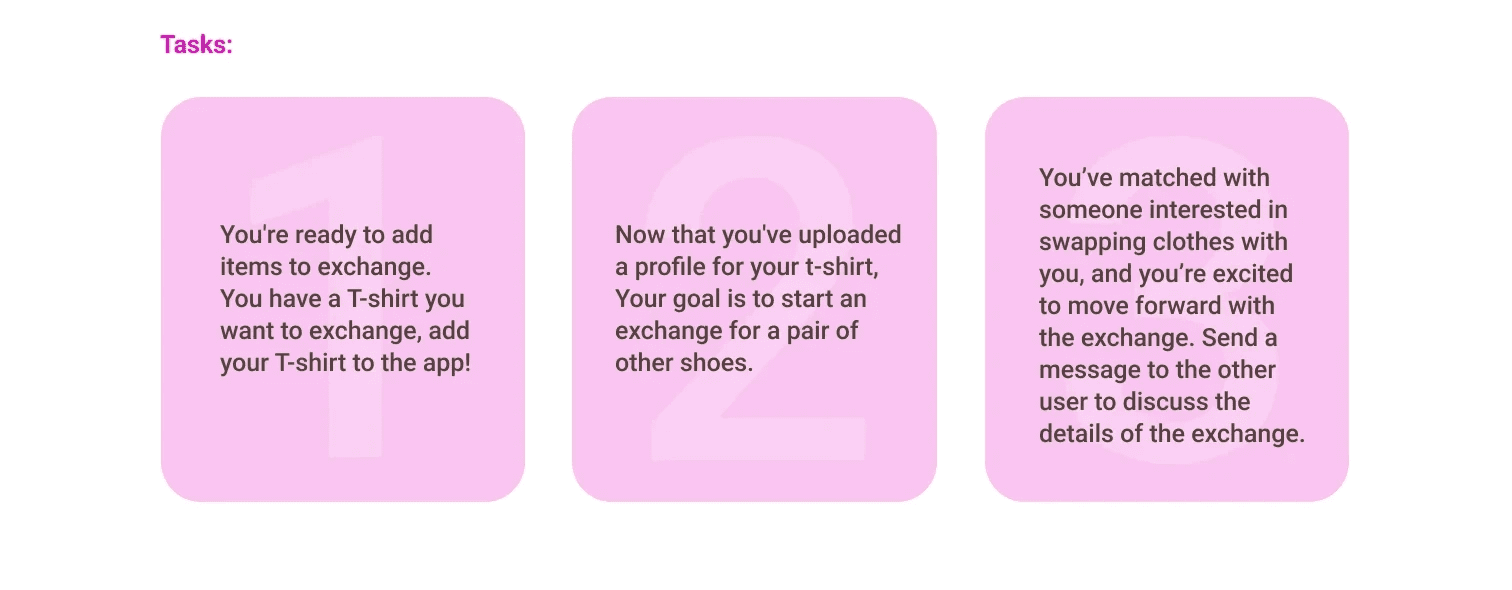
You're ready to add items to exchange.
You have a T-shirt you want to exchange, add your T-shirt to the app!
3
Now that you've uploaded
a profile for your t-shirt, your goal is to start an exchange for a pair of other shoes.
You’ve matched with someone interested in swapping clothes with you, and you’re excited
to move forward with
the exchange. Send a message to the other user to discuss the details of the exchange.
After creating scenarios, I conducted usability tests to see how users interact with the design. The tests help identify any issues and gather feedback, allowing me to make improvements before finalizing the design.
After creating scenarios, I conducted usability tests to see how users interact with the design. The tests help identify any issues and gather feedback, allowing me to make improvements before finalizing the design.
Backstory:
You're passionate about second-hand fashion and love breathing new life into unique pieces. Now, you've found this app—Swap style, a second-hand platform for outfit items, where you can upload profiles of the clothes you'd like to swap with others.
Backstory:
You're passionate about second-hand fashion and love breathing new life into unique pieces. Now, you've found this app—Swap style, a second-hand platform for outfit items, where you can upload profiles of the clothes you'd like to swap with others.
2
Now that you've uploaded
a profile for your t-shirt, your goal is to start an exchange for a pair of other shoes.
1
3
You’ve matched with someone interested in swapping clothes with you, and you’re excited to move forward with the exchange. Send a message to the other user to discuss the details of the exchange.
You're ready to add items to exchange.
You have a T-shirt you want to exchange, add your T-shirt to the app!
Tasks:
Tasks:
Scenarios
After creating scenarios, I conducted usability tests to see how users interact with the design. The tests help identify any issues and gather feedback, allowing me to make improvements before finalizing the design.
Summary of usability test
Summary of usability test
-
After mapping the user flow, I gained a clearer understanding of how users interact with the app step by step. To make these flows more tangible, I developed scenarios that illustrate how users might engage with SwapStyle in different real-life contexts.
Paper + Wireframe + High-fidelity prototyping
Paper + Wireframe + High-fidelity prototyping
Paper + Wireframe + High-fidelity prototyping
Summary of usability test
-
I conducted three rounds of usability tests with four participants in each round to find design issues. Here are the images from the process and a summary of the feedback I received:
I conducted three rounds of usability tests with four participants in each round to find design issues. Here are the images from the process and a summary of the feedback I received:
I conducted three rounds of usability tests with four participants in each round to find design issues. Here are the images from the process and a summary of the feedback I received:
Scenarios
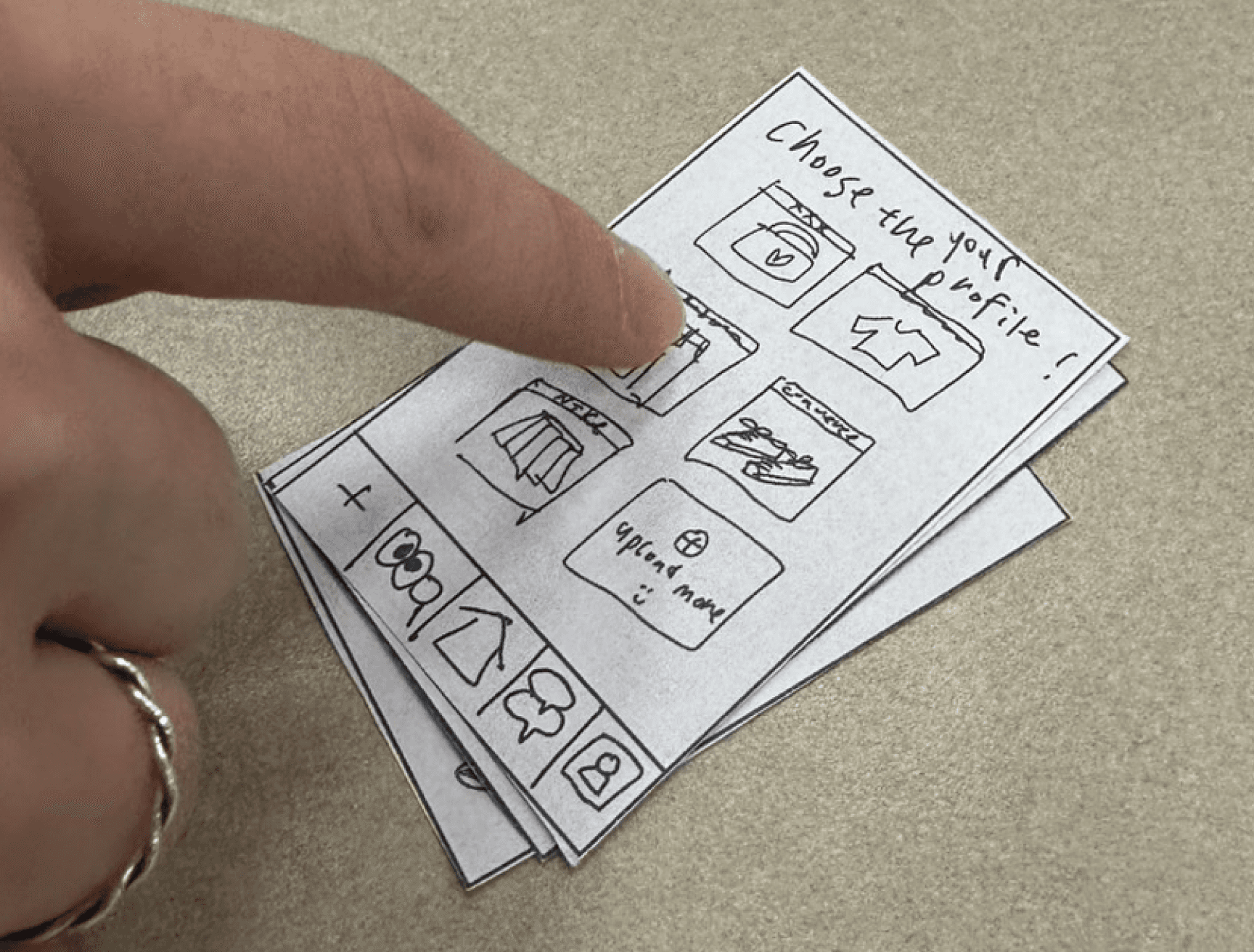
Usability Testing Round 1: Paper prototyping
Usability Testing Round 1: Paper prototyping
Based on the feedback from my paper prototype testing, I made the following changes:
Revised swipe interaction: I replaced the original method of expressing likes or dislikes for other users' items with a more familiar left-and-right swipe interaction.
Updated icons: The icons were changed from "X" and a smiley face to "X" and "♥" for clearer expression of preferences.
Improved detail viewing: I updated the option for viewing more details to allow users to see additional photos of the items provided by others.
Based on the feedback from my paper prototype testing, I made the following changes:
Revised swipe interaction: I replaced the original method of expressing likes or dislikes for other users' items with a more familiar left-and-right swipe interaction.
Updated icons: The icons were changed from "X" and a smiley face to "X" and "♥" for clearer expression of preferences.
Improved detail viewing: I updated the option for viewing more details to allow users to see additional photos of the items provided by others.
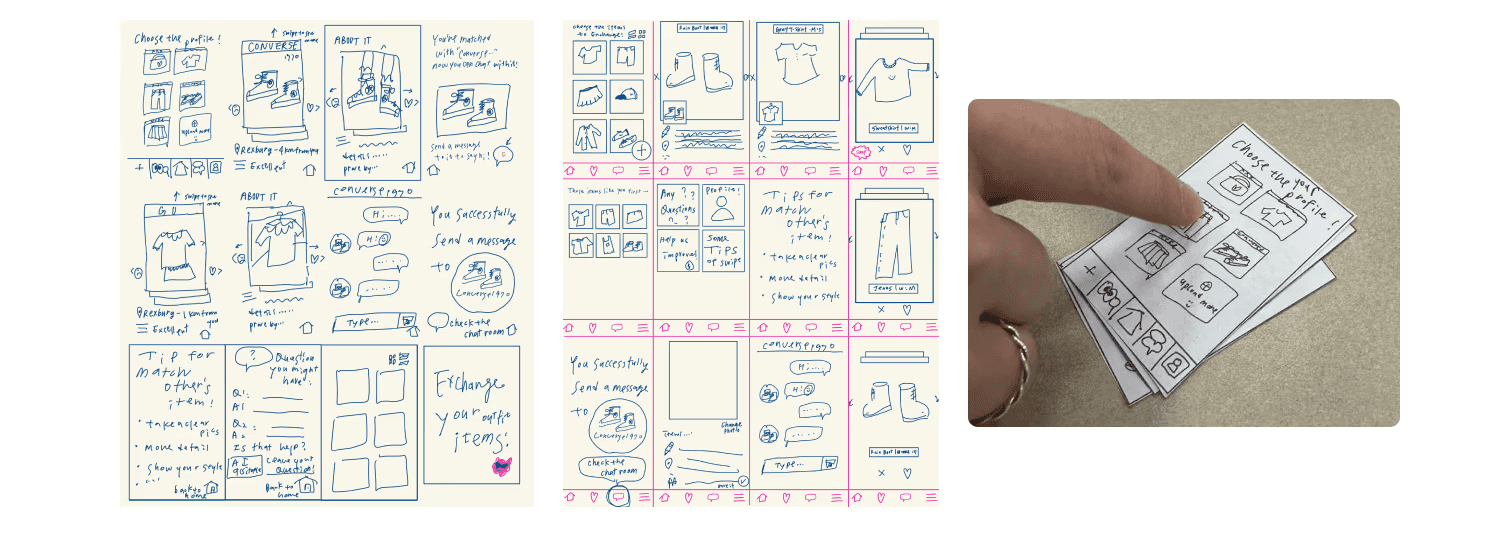
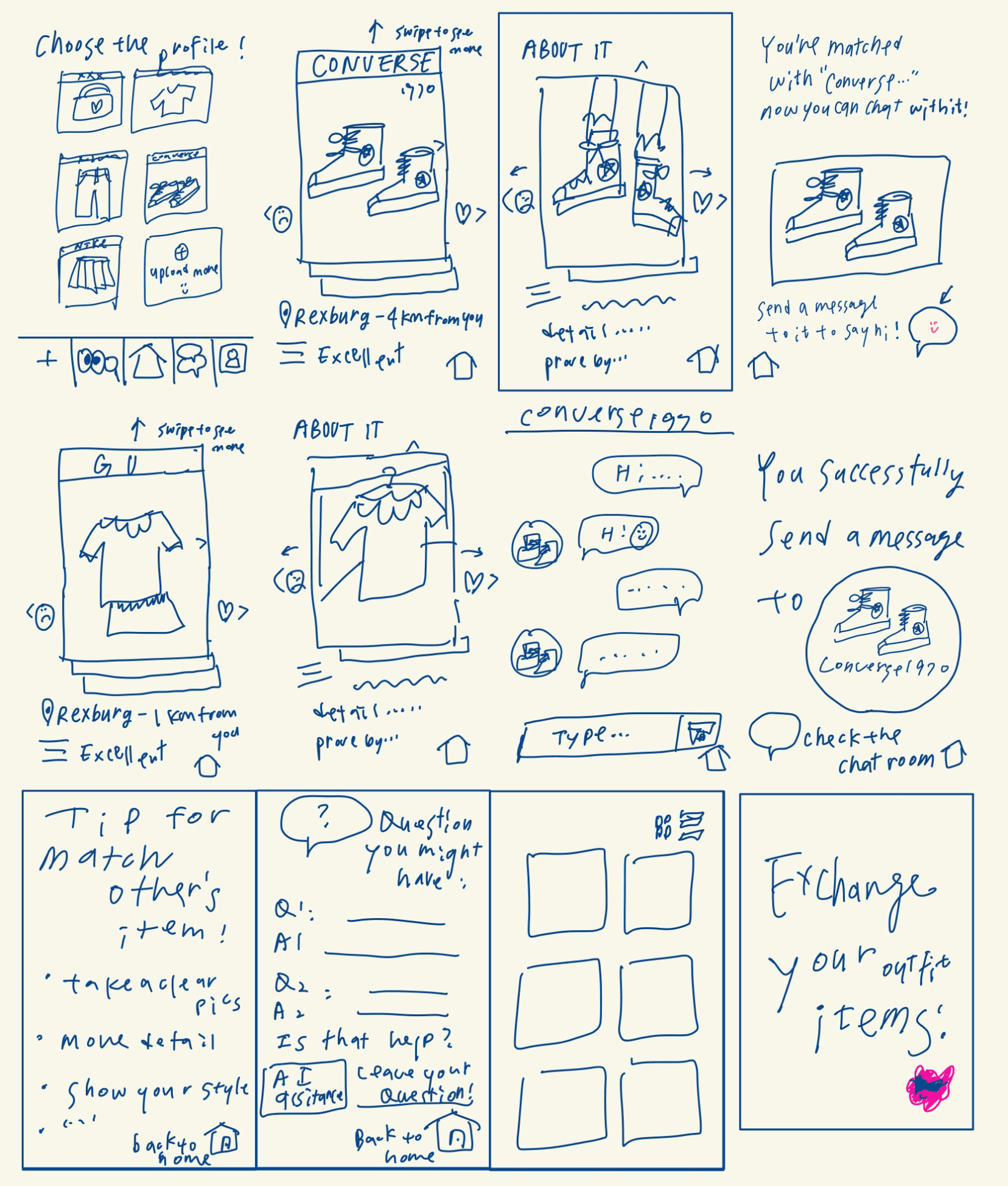
Usability Testing Round 1: Paper prototyping
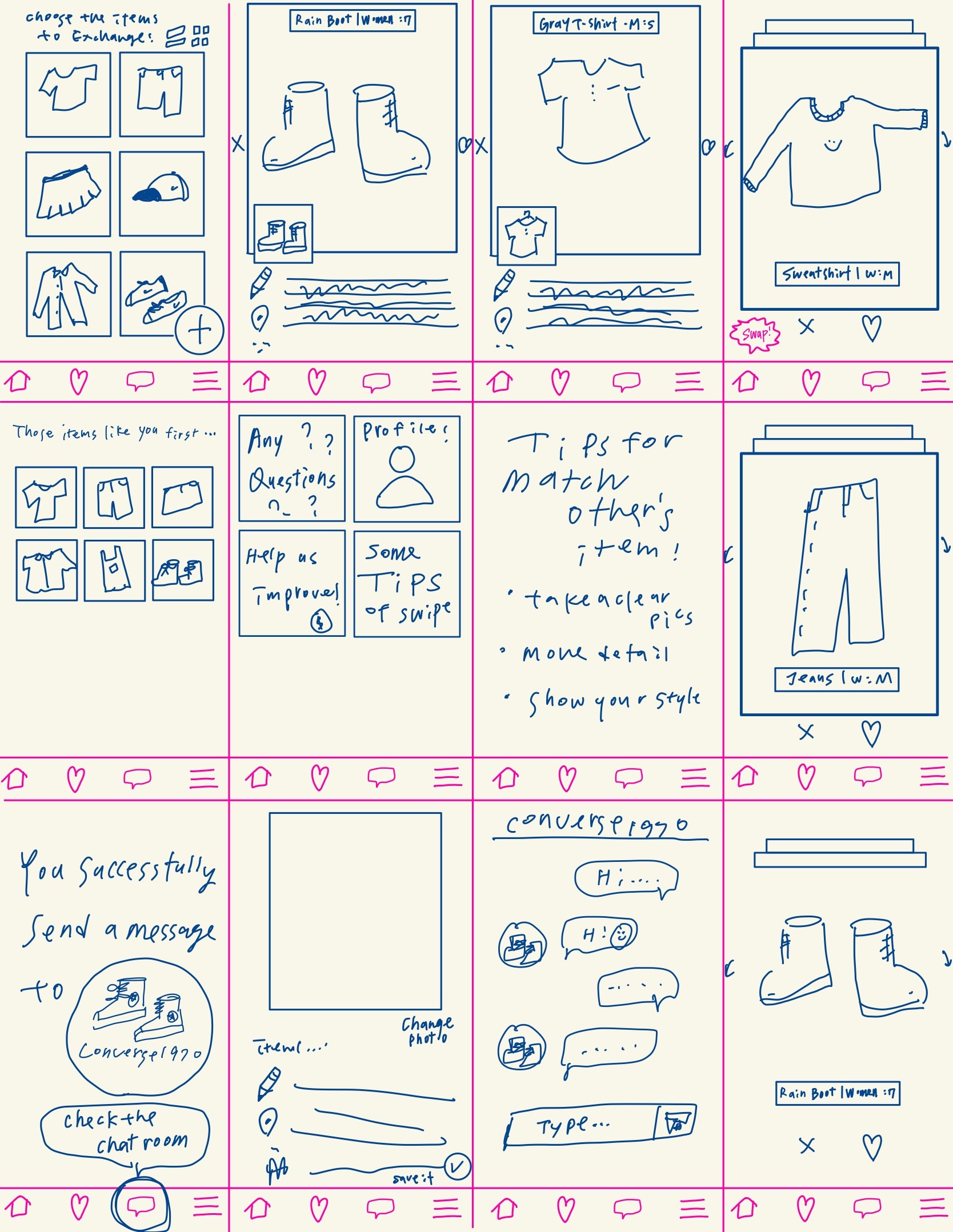
Usability testing round 2: Wireframes prototyping
Usability testing round 2: Wireframes prototyping
This is the wireframe, a visual outline that helps me add more details to my SwapStyle design.
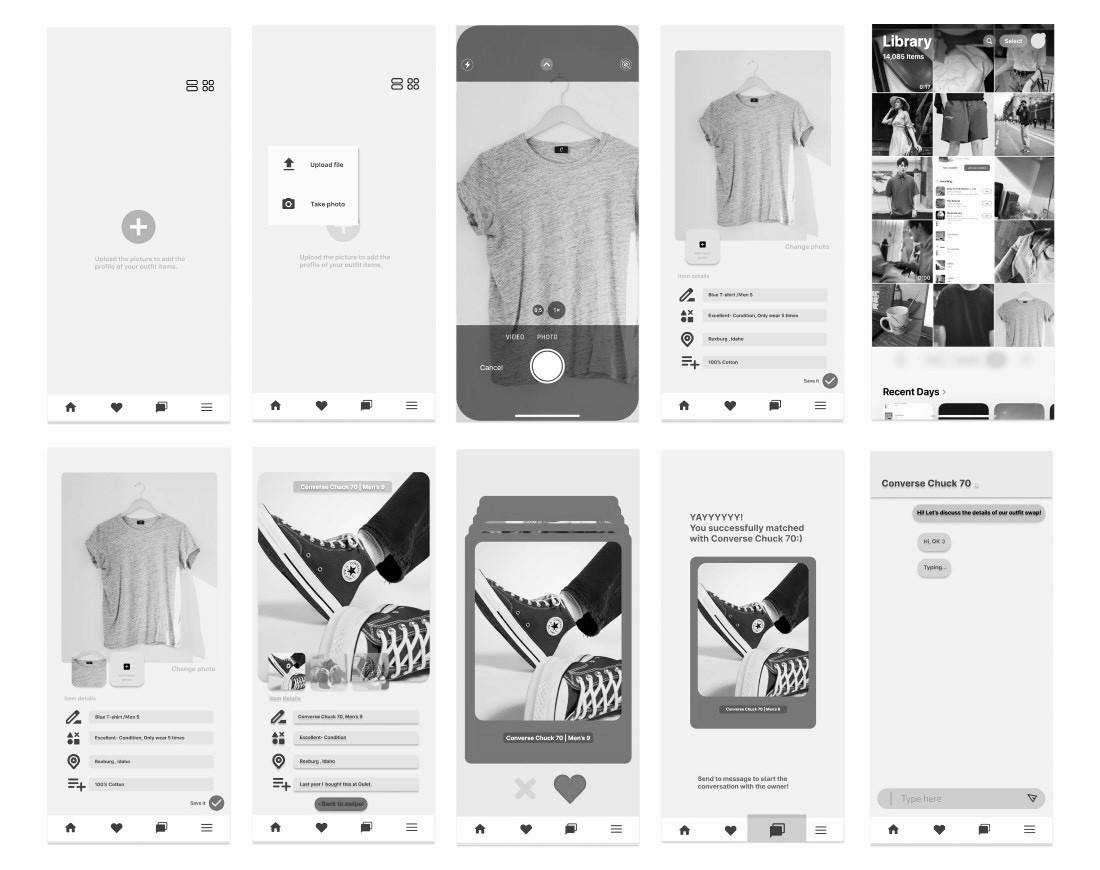
Takeaways from wireframes prototyping:
I clearly define the functionality and links for each icon.
Determine the corresponding results or links for each option selected.
Based on the feedback from my paper prototype testing, I made the following changes:
Revised swipe interaction: I replaced the original method of expressing likes or dislikes for other users' items with a more familiar left-and-right swipe interaction.
Updated icons: The icons were changed from "X" and a smiley face to "X" and "♥" for clearer expression of preferences.
Improved detail viewing: I updated the option for viewing more details to allow users to see additional photos of the items provided by others.
Takeaways from High-Fidelity prototype:
Added "X" and "♥" icons at the bottom to clearly indicate swipe directions (Left and Right).
Included a navigation tab at the bottom for easier access to different sections of the app.
Improved user guidance within the app for a more intuitive and smooth experience.
swipe to left and right
for like or dislike.
Chat room
Usability testing round 3 : High-Fidelity Prototyping
This is the wireframe, a visual outline that helps me add more details to my SwapStyle design.
Takeaways from wireframes prototyping:
I clearly define the functionality and links for each icon.
Determine the corresponding results or links for each option selected.
Takeaways from wireframes prototyping:
I clearly define the functionality and links for each icon.
Determine the corresponding results or links for each option selected.
After testing the initial wireframes prototyping , I moved on to designing a High-Fidelity Prototyping
After testing the initial wireframes prototyping , I moved on to designing a High-Fidelity Prototyping
This is the wireframe, a visual outline that helps me add more details to my SwapStyle design.
Usability testing round 2: Wireframes prototyping
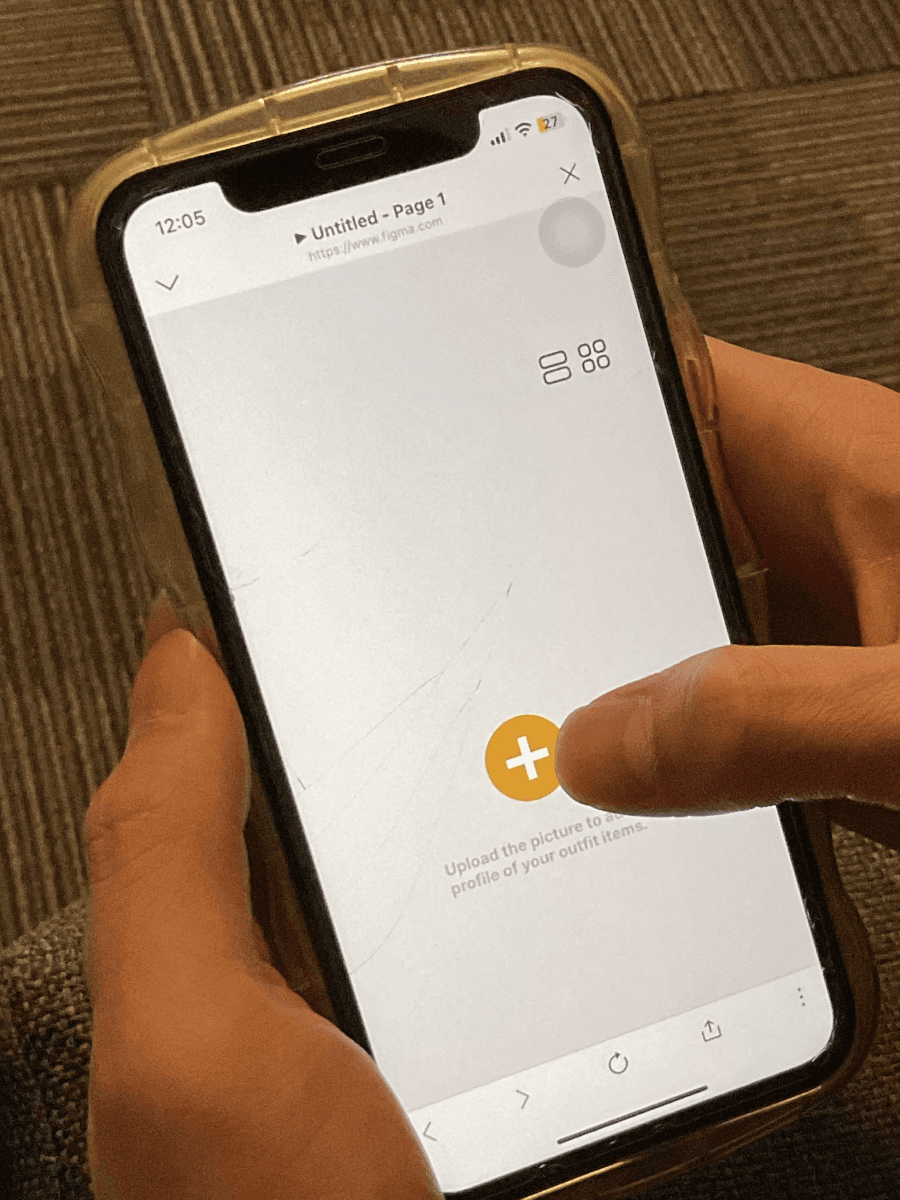
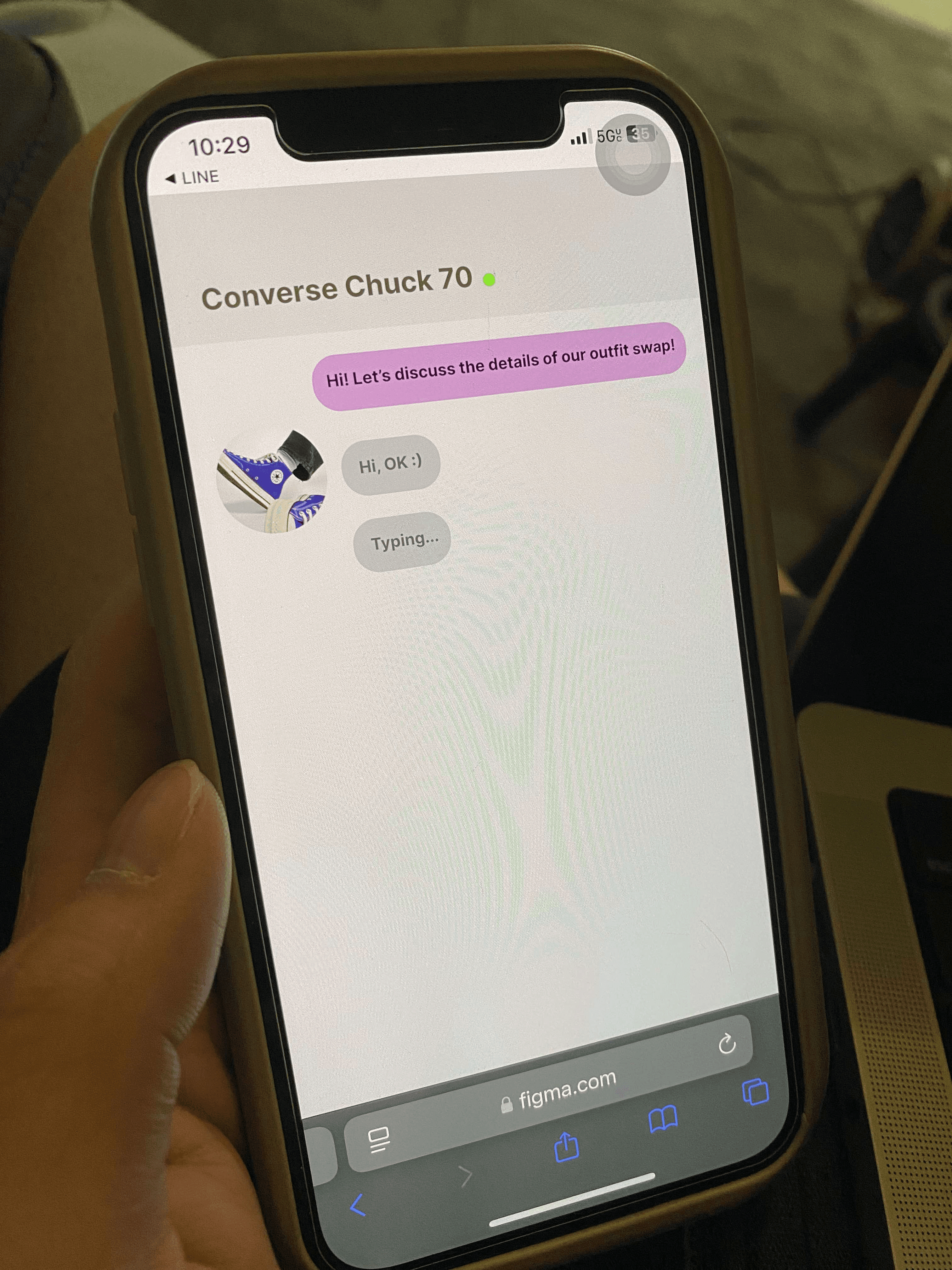
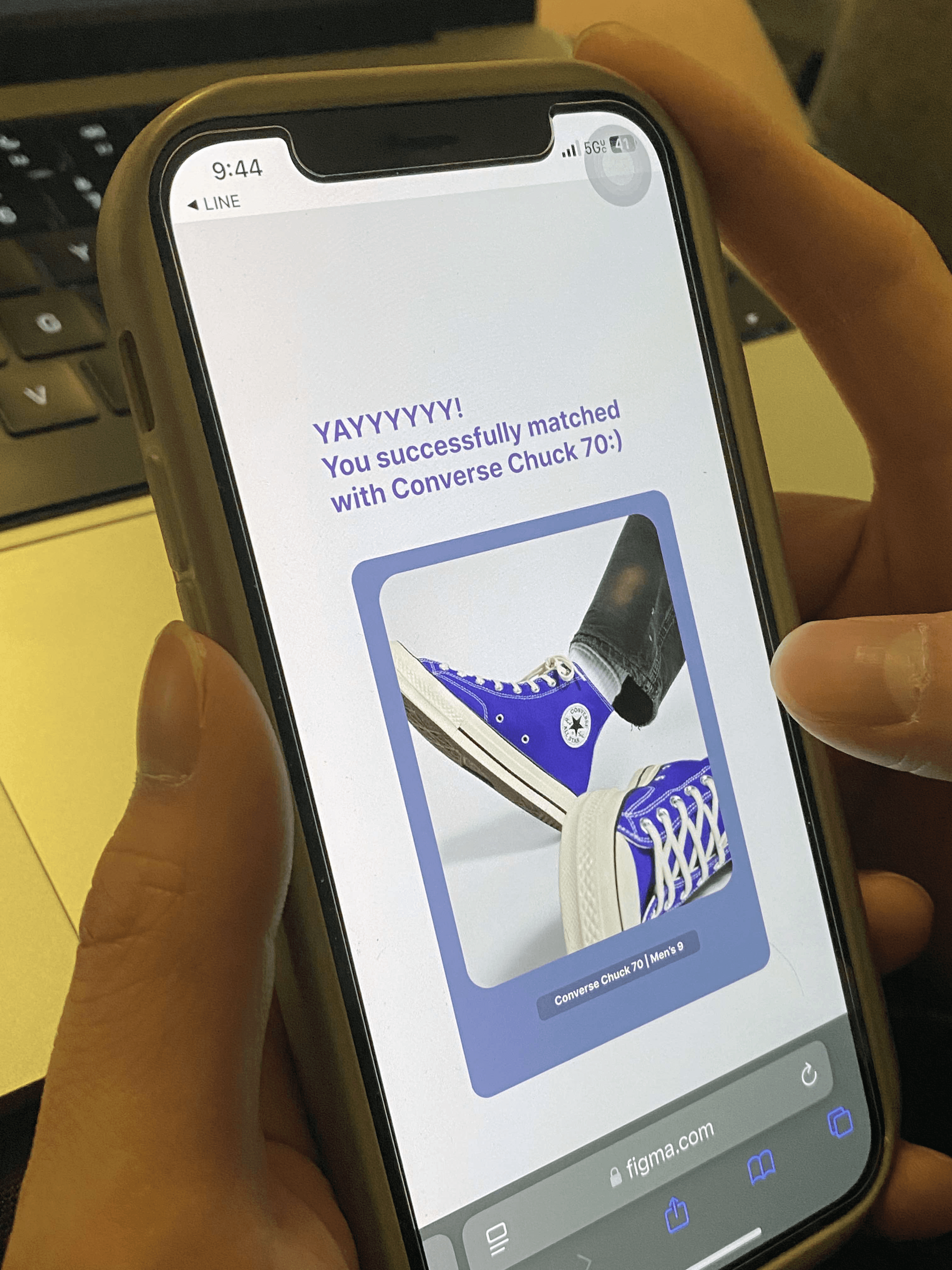
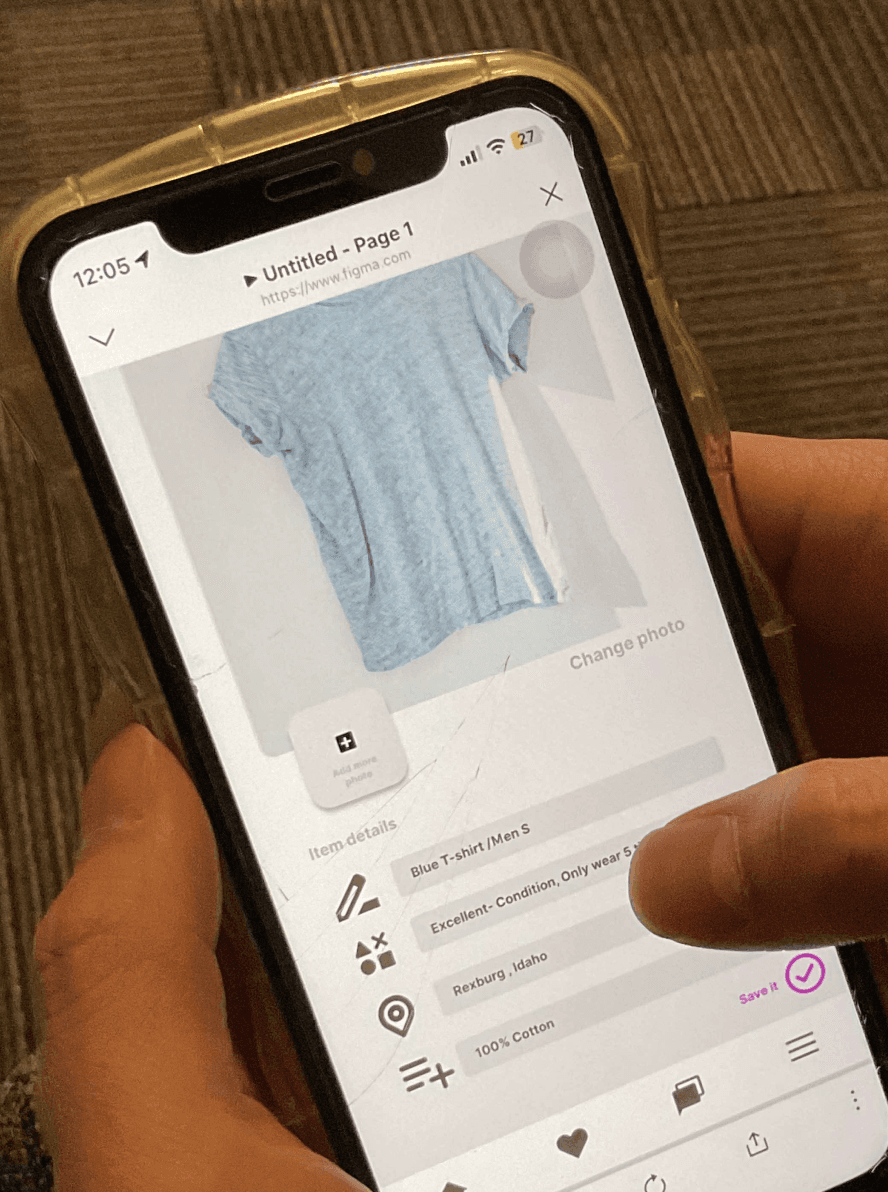
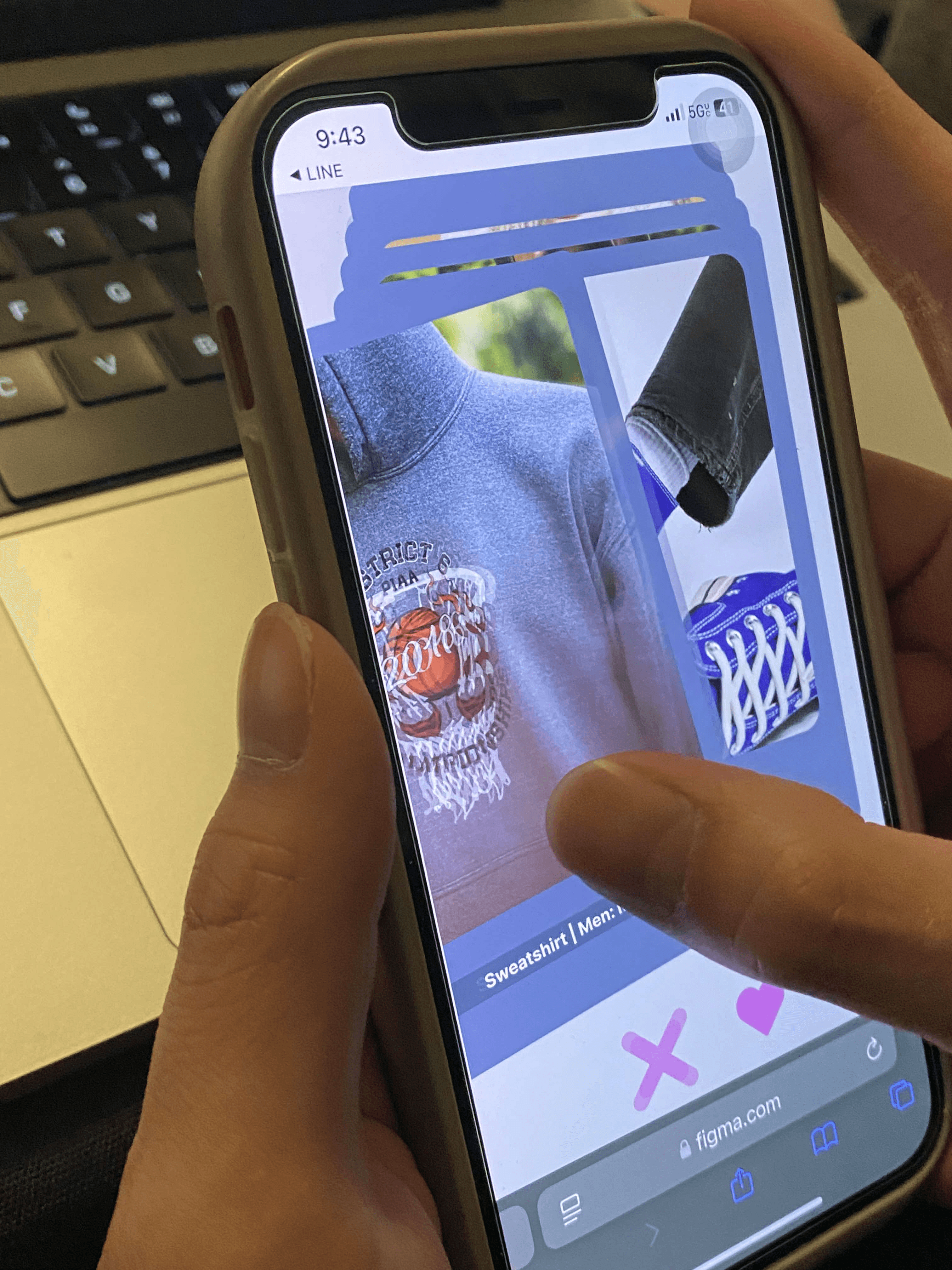
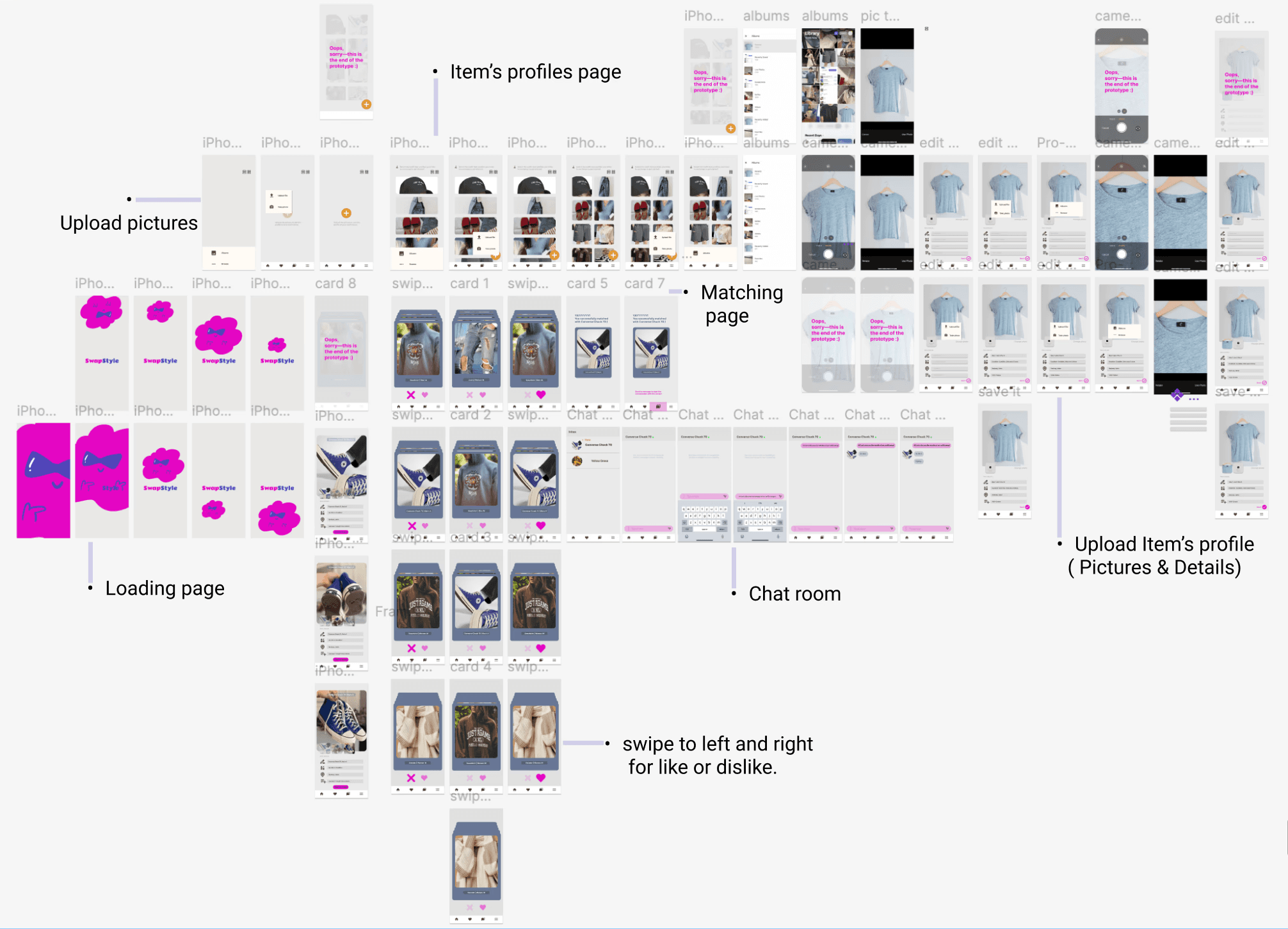
The photos, from left to right, show the process of adding an outfit profile (picture and description), swiping to like or dislike, matching with other users' items, and sending messages in the chatroom.
The photos, from left to right, show the process of adding an outfit profile (picture and description), swiping to like or dislike, matching with other users' items, and sending messages in the chatroom.
Takeaways from High-Fidelity prototype:
Added "X" and "♥" icons at the bottom to clearly indicate swipe directions (Left and Right).
Included a navigation tab at the bottom for easier access to different sections of the app.
Improved user guidance within the app for a more intuitive and smooth experience.
Let’s work through my scenarios!
This project taught me the importance of checking our ideas before starting the design and being open to feedback. Being clear and detailed in every part is crucial, and good signage can enhance the user experience.
To improve the interface features, I plan to carefully connect each user touchpoint and look at more similar websites for inspiration.
Next, I plan to add a Shopping Mode so users can directly buy secondhand items in addition to swapping.
This will make the platform more flexible and inclusive, while keeping the experience fun, social, and sustainable. I also want to refine the Swap–Shop toggle and improve search for smoother discovery.
Takeaways -Next steps

Let’s work through my scenarios!
This project taught me the importance of checking our ideas before starting the design and being open to feedback. Being clear and detailed in every part is crucial, and good signage can enhance the user experience.
To improve the interface features, I plan to carefully connect each user touchpoint and look at more similar websites for inspiration.
This project taught me the importance of checking our ideas before starting the design and being open to feedback. Being clear and detailed in every part is crucial, and good signage can enhance the user experience.
To improve the interface features, I plan to carefully connect each user touchpoint and look at more similar websites for inspiration.
After testing the initial wireframes prototyping , I moved on to designing a High-Fidelity Prototyping
Usability testing round 3 : High-Fidelity Prototyping
( High-fidelity Prototype)
Takeaways from High-Fidelity prototype:
Added "X" and "♥" icons at the bottom to clearly indicate swipe directions (Left and Right).
Included a navigation tab at the bottom for easier access to different sections of the app.
Improved user guidance within the app for a more intuitive and smooth experience.
( High-fidelity Prototype)
Usability testing round 3 : High-Fidelity Prototyping
The photos, from left to right, show the process of adding an outfit profile (picture and description), swiping to like or dislike, matching with other users' items, and sending messages in the chatroom.
( High-fidelity Prototype)
Takeaways -Next steps
Takeaways -Next steps
Next, I plan to add a Shopping Mode so users can directly buy secondhand items in addition to swapping.
This will make the platform more flexible and inclusive, while keeping the experience fun, social, and sustainable.
I also want to refine the Swap–Shop toggle and improve search for smoother discovery.
Next, I plan to add a Shopping Mode so users can directly buy secondhand items in addition to swapping.
This will make the platform more flexible and inclusive, while keeping the experience fun, social, and sustainable.
I also want to refine the Swap–Shop toggle and improve search for smoother discovery.
Scenarios