Ethnographic Research
Research+ Ideation!


Ux Case Study
Ux Case Study
Ux Case Study
OurNest: Bridging Generations Through Shared Memories
OurNest: Bridging Generations Through Shared Memories
OurNest: Bridging Generations Through Shared Memories
ROLE
UX/UI Designer
EXPERTISE
UX/UI Design
YEAR
2026
Misunderstandings between generations often stem not from a lack of love, but from differences in communication styles. Inspired by research into family communication friction, I created OurNest, a structured digital platform that uses memory sharing, guided tasks, and visual storytelling to foster empathy across generations.
Misunderstandings between generations often stem not from a lack of love, but from differences in communication styles. Inspired by research into family communication friction, I created OurNest, a structured digital platform that uses memory sharing, guided tasks, and visual storytelling to foster empathy across generations.
Overview
-
Project Overview
Overview
-
Project Overview
Overview
-
Project Overview
OurNest was a team project with two members, aimed at bridging generational gaps within families. My teammate and I collaborated on research, ideation, user flows, and design decisions. I focused on user research, visual identity, and design documentation, while my teammate focused on prototyping.
Many families struggle to understand one another due to differences in expectations, tone, and emotional expression. Inspired by these everyday frictions, we created OurNest, a digital platform that transforms family memories into a shared, visual, and interactive experience. Instead of forcing conversation, OurNest builds a low-pressure emotional bridge through storytelling, guided tasks, and playful room customization.
The project explored how structured digital interactions can foster understanding and connection between family members, helping to reduce miscommunication and strengthen intergenerational empathy.
Why is OurNest?
In many families:
Emotional topics are the hardest to discuss.
Miscommunication often leads to frustration or silence.
Conversations feel emotionally draining rather than connecting.
Through our first survey, we discovered:
53% of misunderstandings happen between parents and children.
26% occur between grandparents and grandchildren.
Feelings and emotional reactions are the most difficult topics to talk about.
88% of participants expressed interest in a structured digital tool to clarify intentions.
These findings showed that families don’t lack care — they lack structure and safe interaction space.
That’s why I designed OurNest:
A digital platform where families share memories inside a shared Memory Box, complete guided tasks, and earn points to decorate their personal virtual rooms — making emotional connection visible and playful.
OurNest was a team project with two members, aimed at bridging generational gaps within families. My teammate and I collaborated on research, ideation, user flows, and design decisions. I focused on user research, visual identity, and design documentation, while my teammate focused on prototyping.
Many families struggle to understand one another due to differences in expectations, tone, and emotional expression. Inspired by these everyday frictions, we created OurNest, a digital platform that transforms family memories into a shared, visual, and interactive experience. Instead of forcing conversation, OurNest builds a low-pressure emotional bridge through storytelling, guided tasks, and playful room customization.
The project explored how structured digital interactions can foster understanding and connection between family members, helping to reduce miscommunication and strengthen intergenerational empathy.
Project Goal + Process
-
Project Goal + Process
-
Project Goal + Process
-
Let’s make family connection gentle, structured, and meaningful.
Let’s make family connection gentle, structured, and meaningful.
Let’s make family connection gentle, structured, and meaningful.
Reduce generational misunderstandings through indirect storytelling
Create a low-pressure environment for emotional sharing
Encourage consistent engagement through gamification
Build empathy without forcing direct confrontation
Design an interface accessible for both younger and older users
Create a more engaging experience for second-hand clothing exchange
Design a user-friendly interface that lowers the barrier to participation
Encourage sustainable fashion habits through easy and fun swapping.
Increase user participation and retention in the exchange process.
User Pain Points
User Pain Points
User Pain Points
Through surveys and market research, we found that:
Emotional conversations feel confrontational or uncomfortable.
Older generations may struggle with complex interfaces.
Younger users disengage quickly without interactive or rewarding elements.
Existing apps focus on messaging, task management, or social sharing — not intergenerational empathy.
Through analyzing current secondhand platforms and observing user behavior, I found that…
Users who want to exchange clothes often find the process time-consuming and unorganized.
Many secondhand platforms require long browsing sessions, making it hard to find something they actually like.
Some people feel uncomfortable or hesitant about trading due to unclear item conditions or a lack of trust.
Through surveys and market research, we found that:
Emotional conversations feel confrontational or uncomfortable.
Older generations may struggle with complex interfaces.
Younger users disengage quickly without interactive or rewarding elements.
Existing apps focus on messaging, task management, or social sharing — not intergenerational empathy.
Through analyzing current secondhand platforms and observing user behavior, I found that…
Users who want to exchange clothes often find the process time-consuming and unorganized.
Many secondhand platforms require long browsing sessions, making it hard to find something they actually like.
Some people feel uncomfortable or hesitant about trading due to unclear item conditions or a lack of trust.
Through surveys and market research, we found that:
Emotional conversations feel confrontational or uncomfortable.
Older generations may struggle with complex interfaces.
Younger users disengage quickly without interactive or rewarding elements.
Existing apps focus on messaging, task management, or social sharing — not intergenerational empathy.
Through analyzing current secondhand platforms and observing user behavior, I found that…
Users who want to exchange clothes often find the process time-consuming and unorganized.
Many secondhand platforms require long browsing sessions, making it hard to find something they actually like.
Some people feel uncomfortable or hesitant about trading due to unclear item conditions or a lack of trust.
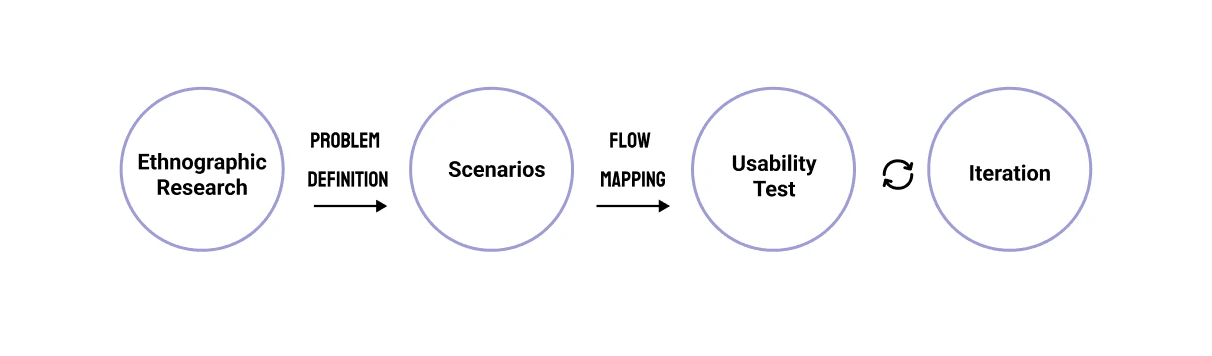
Ethnographic Research
Ethnographic Research
Research+ Ideation!
Competitive Analysis
Research+ Ideation!
I researched existing family-oriented apps, virtual room customization apps, and reward-based engagement platforms to understand how digital interactions can encourage participation, storytelling, and connection between family members. The goal was to gather ideas for making intergenerational communication playful, low-pressure, and visually engaging.
From my ethnographic research, I found the following insights:
Families often struggle to have meaningful conversations, especially about emotions and personal experiences.
Many people use apps for task management, relationship maintenance, or virtual spaces, but none directly support intergenerational communication.
Reward systems, gamification, and visual customization increase user engagement and motivation in other apps.
Visual representations of personal contributions (like avatars or illustrations) make interactions feel tangible and playful.
Structured prompts or guided tasks can reduce friction and make emotional topics easier to discuss.
I researched existing family-oriented apps, virtual room customization apps, and reward-based engagement platforms to understand how digital interactions can encourage participation, storytelling, and connection between family members. The goal was to gather ideas for making intergenerational communication playful, low-pressure, and visually engaging.
From my ethnographic research, I found the following insights:
Families often struggle to have meaningful conversations, especially about emotions and personal experiences.
Many people use apps for task management, relationship maintenance, or virtual spaces, but none directly support intergenerational communication.
Reward systems, gamification, and visual customization increase user engagement and motivation in other apps.
Visual representations of personal contributions (like avatars or illustrations) make interactions feel tangible and playful.
Structured prompts or guided tasks can reduce friction and make emotional topics easier to discuss.
I have researched second-hand exchange and trading platforms, as well as other popular apps, to collect fun and interesting ideas they use to enhance and engage the user experience, because I wanted to make the exchange process more fun.
I found that the swiping interaction on dating apps is similar to finding something interesting and choosing it, which could make the exchange process easier.
From my ethnographic research, I found the following insights:
People have some experience using second-hand exchange platforms.
For certain types of products, people are willing to use second-hand platforms to find what they need.
When searching for second-hand items, users hope to see detailed descriptions and clear images to help them evaluate the condition of the items.
People are familiar with the swiping style to express like or dislike, as seen in dating or friend-making apps.
This interaction style feels similar to spotting something interesting and choosing it, which could make the exchange process easier.
Although there are various second-hand platforms available, some people remain concerned about the risks of exchanging or buying second-hand products.
Other Research:
Other Research:

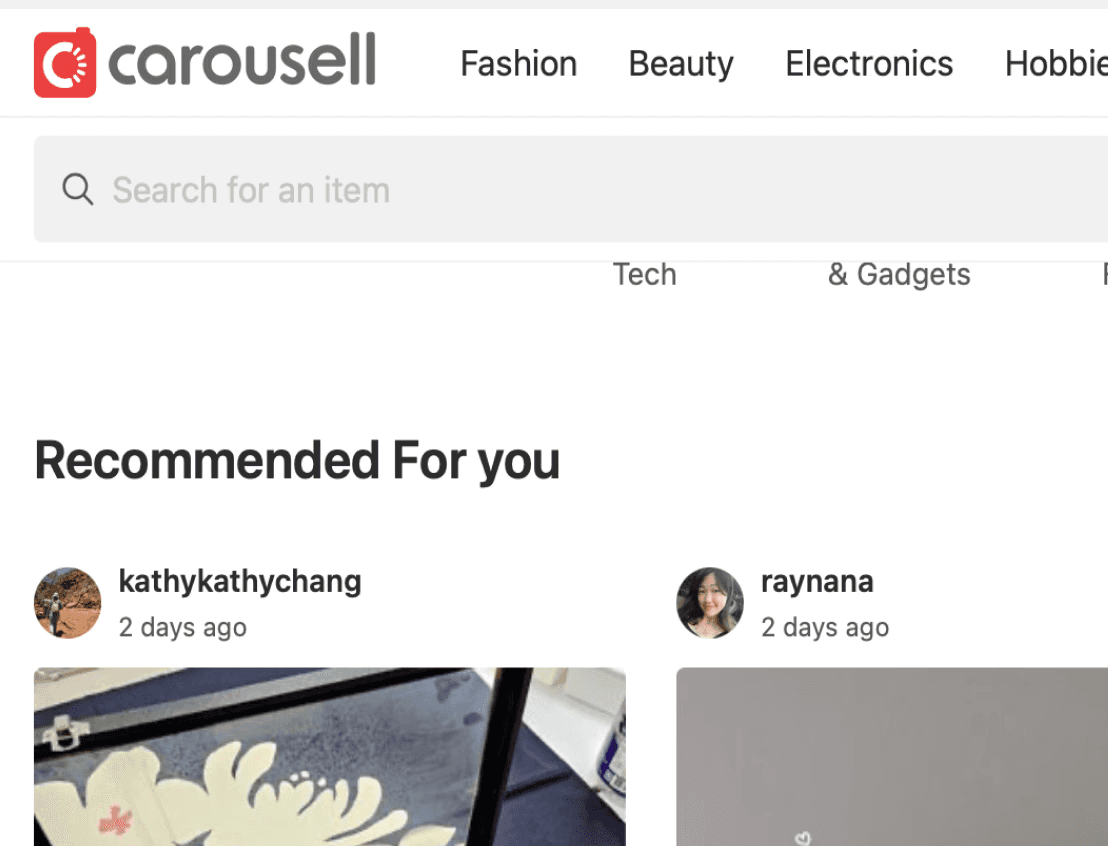
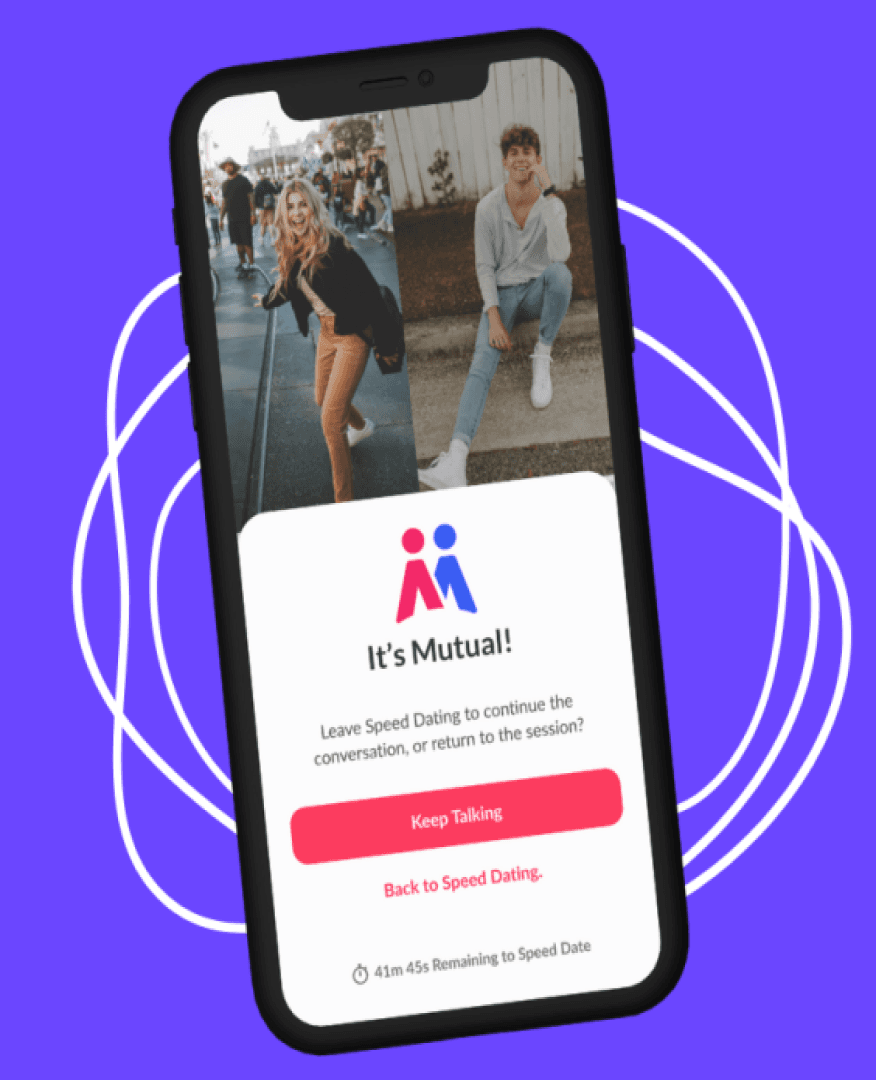
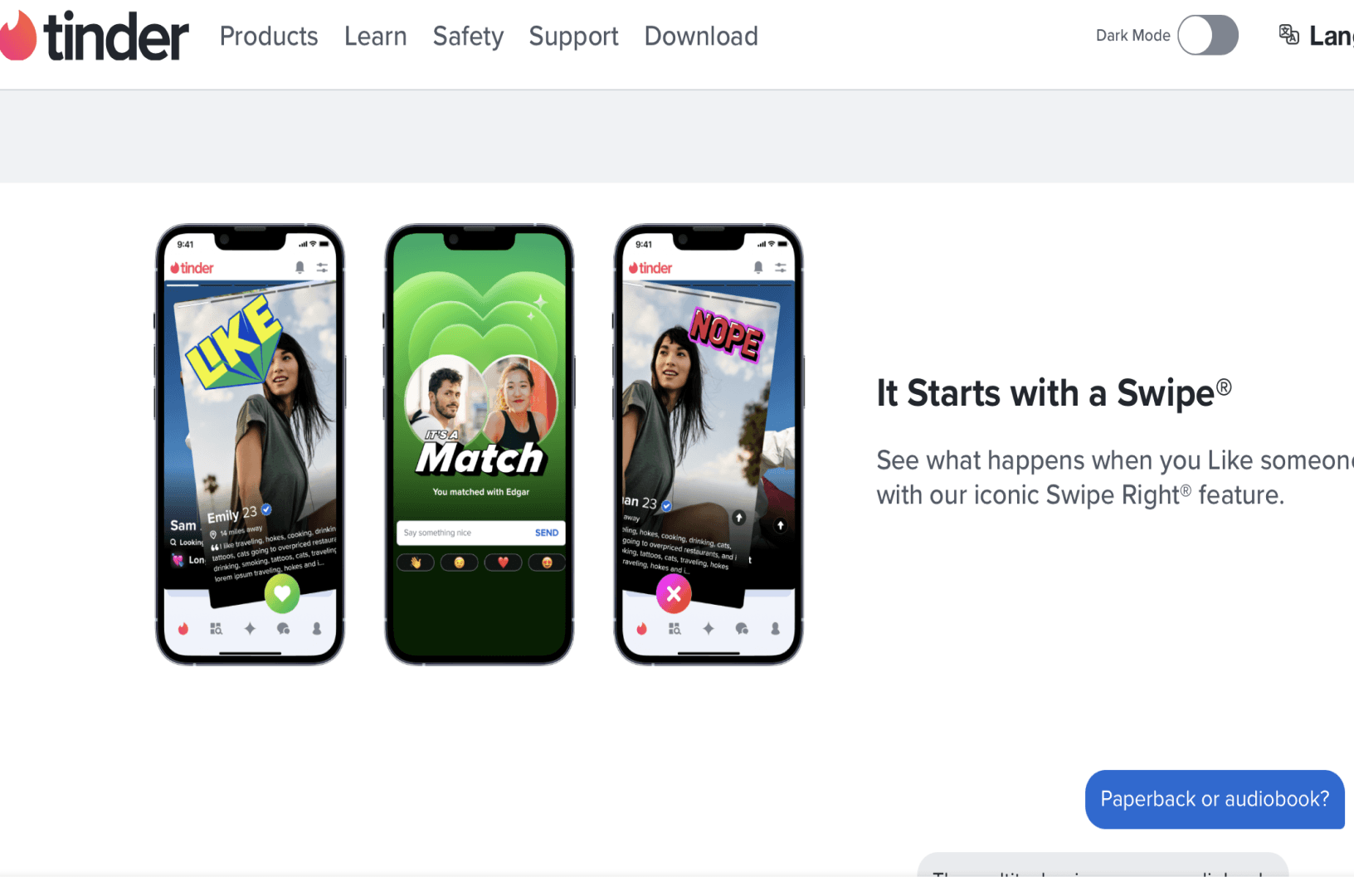
Based on the insights, here are the ideas I want to incorporate into this design:
Based on the insights, here are the ideas I want to incorporate into this design:
Based on the insights, here are the ideas I want to incorporate into this design:
Guided Tasks – Provide structured prompts to encourage sharing and reduce the pressure of direct conversation.
Points & Rewards System – Completing tasks earns points that can be spent on room and avatar decorations, motivating participation.
Personal Virtual Rooms – Each family member can decorate their own space, creating a sense of ownership while exploring others’ contributions.
Shared Memory Box – Allow family members to upload stories, photos, and objects, making memories visible and interactive.
AI-generated Illustrations – Each contribution becomes a unique, playful visual, helping members engage with memories non-verbally.
Using these findings, we created a user flow that visualizes how family members navigate OurNest, interact with the Memory Box, complete tasks, and customize their rooms. This helped identify key interaction points and informed scenario creation to illustrate real-life engagement with the platform.
Guided Tasks – Provide structured prompts to encourage sharing and reduce the pressure of direct conversation.
Points & Rewards System – Completing tasks earns points that can be spent on room and avatar decorations, motivating participation.
Personal Virtual Rooms – Each family member can decorate their own space, creating a sense of ownership while exploring others’ contributions.
Shared Memory Box – Allow family members to upload stories, photos, and objects, making memories visible and interactive.
AI-generated Illustrations – Each contribution becomes a unique, playful visual, helping members engage with memories non-verbally.
Using these findings, we created a user flow that visualizes how family members navigate OurNest, interact with the Memory Box, complete tasks, and customize their rooms. This helped identify key interaction points and informed scenario creation to illustrate real-life engagement with the platform.
Based on the findings from my ethnographic research, I created a user flow to visualize how users navigate through the OurNest app. This process helped me identify key interaction points and refine the overall experience, which later informed the scenarios illustrating how users engage with the system in real-life situations.
Based on the findings from my ethnographic research, I created a user flow to visualize how users navigate through the OurNest app. This process helped me identify key interaction points and refine the overall experience, which later informed the scenarios illustrating how users engage with the system in real-life situations.
Based on the findings from my ethnographic research, I created a user flow to visualize how users navigate through the OurNest app. This process helped me identify key interaction points and refine the overall experience, which later informed the scenarios illustrating how users engage with the system in real-life situations.
User Flow
User Flow
User Flow

After mapping the user flow, I gained a clearer understanding of how users interact with the app step by step. To make these flows more tangible, I developed scenarios that illustrate how users might engage with SwapStyle in different real-life contexts.
After mapping the user flow, I gained a clearer understanding of how users interact with the app step by step. To make these flows more tangible, I developed scenarios that illustrate how users might engage with Ournest in different real-life contexts.
Summary of usability test
-
This is the wireframe, a visual outline that helps me add more details to my SwapStyle design.
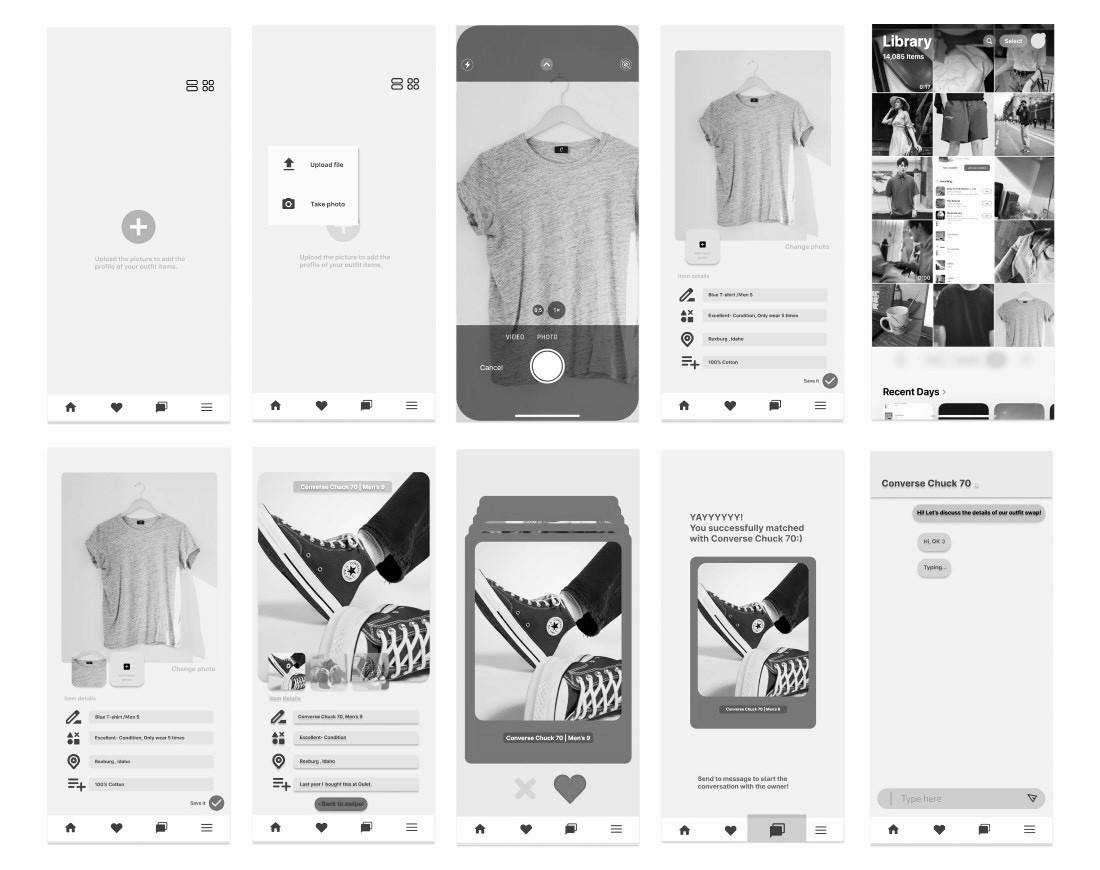
Takeaways from wireframes prototyping:
I clearly define the functionality and links for each icon.
Determine the corresponding results or links for each option selected.
The photos, from left to right, show the process of adding an outfit profile (picture and description), swiping to like or dislike, matching with other users' items, and sending messages in the chatroom.
Takeaways from High-Fidelity prototype:
Added "X" and "♥" icons at the bottom to clearly indicate swipe directions (Left and Right).
Included a navigation tab at the bottom for easier access to different sections of the app.
Improved user guidance within the app for a more intuitive and smooth experience.
Let’s work through my scenarios!
Takeaways -Next steps
Scenarios
